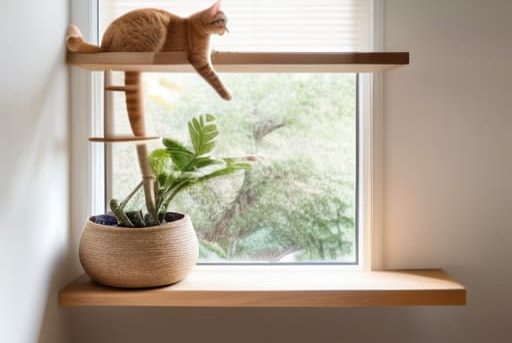
I once spent forty-five minutes trying to coax a terrified, senior rescue cat out from under a heavy oak sideboard, only to realize he wasn’t hiding because he was sick, but because he felt completely exposed in the middle of the living room. Most people think that buying a $200 carpeted tower from a big-box pet store is the solution, but if you want to learn how to build vertical space for cats that actually works, you have to stop thinking like a consumer and start thinking like a feline. A towering cat tree is useless if it’s wobbling every time they jump, or if it’s placed in the middle of a high-traffic hallway where they feel like targets.
In this guide, I’m going to skip the fluff and the expensive “designer” nonsense to show you how to create real, stable territory. I’ll walk you through the practicalities of shelf placement, the essential physics of making sure your DIY steps don’t collapse under a heavy tomcat, and how to use what you already have in your house to give them the high ground. We aren’t just decorating; we are building a safety net for their mental health.
Table of Contents
- Step-by-Step Instructions
- Maximizing Small Apartment Space for Cats Without Breaking the Bank
- The Real Risks of Diy Cat Wall Shelves and Mounting Safety
- Five Things Your Cat Actually Needs (And What They Don't)
- The Bottom Line: What You Actually Need to Know
- ## The Real Reason They Need to Climb
- The Bottom Line
- Frequently Asked Questions
Guide Overview
Tools & Supplies
- Drill/Driver for mounting brackets and securing wood
- Level to ensure shelves are straight and safe
- Measuring tape for precise placement
- Wood planks or pre-finished floating shelves (3-5 pieces)
- Heavy-duty L-brackets or wall mounts (set of 10-15)
- Wall anchors for drywall or masonry screws for studs
- Carpet scraps or sisal rope for texture
- Non-toxic wood glue or adhesive for carpet attachment
Step-by-Step Instructions
- 1. First, you need to assess your floor plan like you’re looking at a patient’s chart. Don’t just throw a cat tree in the middle of the living room and hope for the best. Walk through your house and identify the “dead zones”—those awkward corners or stretches of wall that don’t serve a purpose. You’re looking for paths that allow a cat to move from one side of a room to the other without having to touch the floor. If you have a multi-cat household, this is non-negotiable; you need to ensure they can pass each other without a confrontation.
- 2. Pick your surfaces. You don’t need to spend $400 on a floor-to-ceiling carpeted tower that will eventually become a glorified scratching post for your sofa. Instead, look at sturdy, flat-topped furniture you already own. A bookshelf that’s been anchored to the wall is a perfect stepping stone. If you’re feeling handy, you can buy simple wooden floating shelves from a hardware store for about $15 a piece. Just make sure they are rated for the weight; a 5kg cat jumping with momentum exerts a lot more force than a 5kg cat just sitting there.
- 3. Map out the “staircase” effect. Cats aren’t marathon runners; they aren’t going to leap from the floor to a shelf that’s six feet up in one go. You need to create a logical progression of heights. Think of it like a set of stairs. If you have a chair, then a low shelf, then a window perch, you’ve built a route. If there is a massive gap between levels, your cat—especially if they are a senior with a bit of arthritis—will simply give up and stay on the floor.
- 4. Anchor everything like your life depends on it. This is where people get sloppy and where accidents happen. If a cat jumps onto a shelf and that shelf wobbles or tips, you haven’t built a playground; you’ve built a trip hazard. Use L-brackets or heavy-duty furniture anchors to secure every single shelf and piece of furniture you intend to use. I’ve seen enough “gravity-related” injuries in the clinic to know that a wobbly shelf is a recipe for a broken jaw or a torn ligament.
- 5. Incorporate “scent stations” and visual interest. A shelf is just a piece of wood until it’s their shelf. Once you have your structure up, rub a little bit of silvervine or catnip on the corners, or better yet, take a clean old T-shirt of yours and drape it over one of the higher levels. They need to feel like they are in their own territory, not just sitting on your decor.
- 6. Don’t forget the “exit strategy.” Every high perch needs a way down that doesn’t involve a terrifying leap into the unknown. If you have a high shelf that leads to a dead end, your cat might feel cornered and vulnerable. Ensure that every high point has at least two ways to descend, or at least a clear, unobstructed path back down to the ground. A cat that feels trapped is a cat that will stress out, and a stressed cat is a cat that starts peeing on your laundry.
Maximizing Small Apartment Space for Cats Without Breaking the Bank
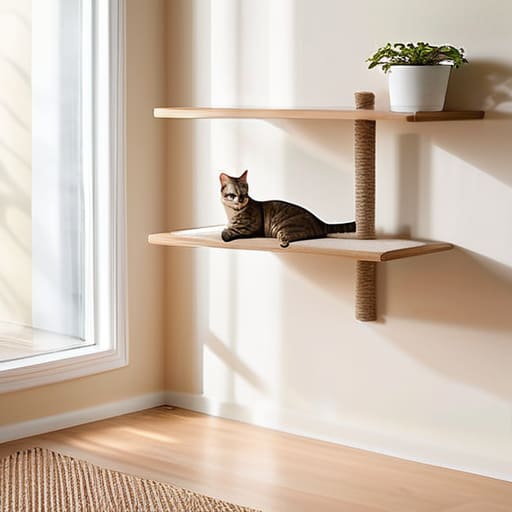
Look, I’ve lived in enough cramped apartments to know that you aren’t going to find a wide-open floor plan for a sprawling cat tree. When you’re working with limited square footage, you have to stop thinking about the floor and start thinking about the walls. Instead of buying one of those massive, carpet-covered towers that takes up half your living room and costs more than my first car, look into DIY cat wall shelves. You can use sturdy, pre-finished floating shelves from a hardware store and just add a bit of sisal rope or a scrap of carpet to the top. It’s significantly cheaper, and it keeps the floor clear for your own feet.
The real trick to maximizing small apartment space for cats is creating a continuous loop. A cat doesn’t just want to sit high up; they want to move through the room without touching the ground. If you can link a few wall-mounted cat walkways together, you’ve essentially given them a private highway. Just please, for the love of everything, don’t skip the cat furniture mounting safety check. I have seen too many owners screw a shelf into nothing but drywall, only to have a fifteen-pound tabby go crashing down mid-nap. Use heavy-duty anchors or, better yet, find a stud. If the shelf wobbles when you push it, it’s not going to hold a cat.
The Real Risks of Diy Cat Wall Shelves and Mounting Safety
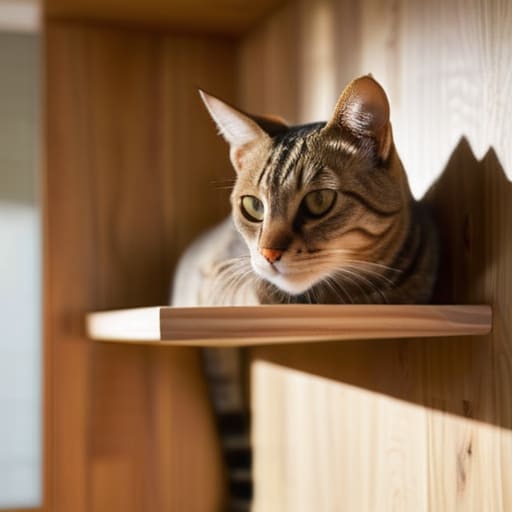
Look, I’ve seen enough “Pinterest-perfect” living rooms turned into emergency triage rooms to know that DIY cat wall shelves are a double-edged sword. If you aren’t careful, you aren’t building enrichment for indoor cats; you’re building a gravity-fed catapult. Most people underestimate the sheer physics of a twelve-pound cat hitting a shelf at full sprint. If you just screw a piece of plywood into some drywall anchors, that shelf is going to come down with the wall, and your cat is going to end up in my clinic with a fractured jaw or a broken limb. You cannot skip the stud finder. Period.
When you’re working on cat climbing wall installation, you need to be looking for solid wood or metal brackets that bite into the studs. If you’re dealing with plaster or thin drywall, you need to treat it like a construction project, not a craft project. I always tell people to test the weight capacity by applying more force than the cat could ever generate—basically, give it a firm, heavy shove with your own weight. If there is even a millimeter of wobble, it’s not safe. Cat furniture mounting safety isn’t about being overcautious; it’s about making sure your “fun project” doesn’t end in a $1,500 vet bill.
Five Things Your Cat Actually Needs (And What They Don't)
- Stop thinking about “climbing trees” and start thinking about “escape routes.” A cat doesn’t just want to go up; they want to be able to get from point A to point B without touching the floor. If you put a shelf in the middle of a room but there’s no way for them to jump from the sofa to that shelf, it’s just an expensive piece of floating wood. Map out a continuous path.
- Check your weight limits twice, then check them again. I’ve seen people try to mount a flimsy piece of pine to drywall using those little plastic anchors you find at the big-box stores. That’s how you end up with a fifteen-pound tabby crashing through a wall and a very expensive vet bill for a broken jaw. If you aren’t hitting a stud, you aren’t mounting a shelf. Period.
- Don’t forget the “landing pads.” If you’re building a series of steps or shelves, make sure the landing area is wide enough for them to actually turn around or settle down. A narrow ledge is fine for a quick sprint, but if they want to nap up there, they need stability. If they feel like they’re balancing on a tightrope, they won’t use it.
- Texture matters more than aesthetics. I know, the carpeted cat tree from the pet store looks like an eyesore in your living room, but cats don’t care about your mid-century modern decor. They need grip. If you’re DIY-ing shelves, wrap the edges in sisal rope or a low-pile carpet remnant. If it’s slippery, it’s useless.
- Watch the “high-traffic” zones. You might think the top of the refrigerator is a great spot, but if you’re constantly bumping into it or if it’s right next to a loud dishwasher, your cat is going to avoid it. They want height, but they also want a sense of security. If the environment is too chaotic, they’ll stay on the floor where it’s predictable.
The Bottom Line: What You Actually Need to Know
Vertical space isn’t a luxury or a way to make your living room look “Pinterest-ready”; for a cat, it is a psychological necessity for feeling safe in a territory. If they can’t get above the floor level, they will live in a state of low-grade stress, which eventually shows up in things like inappropriate urination or aggressive outbursts.
Don’t go overboard with the expensive, designer-branded cat furniture. Most of those “luxury” towers are just glorified carpeted poles that wobble when a ten-pound cat jumps on them. Focus on solid, stable surfaces—real wood or heavy-duty shelving—that won’t budge when they land.
Safety isn’t just about the shelf staying on the wall; it’s about the cat’s physical limits. If you have a senior cat with arthritis or a heavy breed like a Maine Coon, don’t expect them to leap three feet up to a ledge. Build a “staircase” of various heights so they can actually use the space you’ve provided without risking an injury.
## The Real Reason They Need to Climb
“When people ask me why they should bother with shelving or towers, they’re usually thinking about ‘enrichment’ like it’s a luxury item. It isn’t. For a cat, vertical space is about security; it’s the difference between feeling like a predator in their own home and feeling like prey in a hallway. If your cat is constantly pacing or hiding under the sofa, they aren’t being ‘difficult’—they’re looking for the high ground because they don’t feel safe on the floor.”
Marlene Ostrowski
The Bottom Line
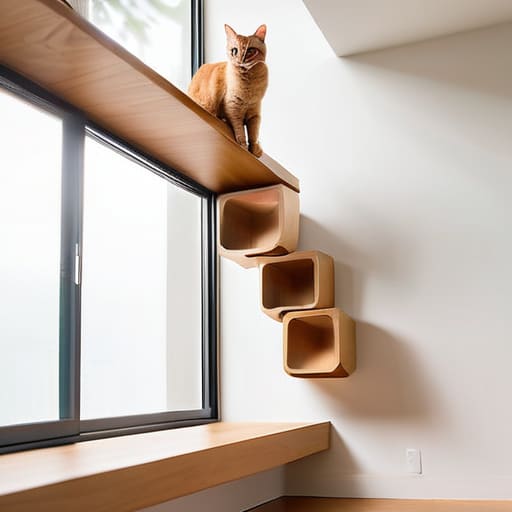
At the end of the day, building vertical space isn’t about buying the most expensive floor-to-ceiling cat tree from a designer catalog. It’s about understanding that your cat sees your home as a 3D map, not a flat floor. Whether you’re repurposing an old bookshelf, securing some sturdy floating shelves, or just clearing off a high mantle, the goal is the same: giving them a way to observe the room without feeling vulnerable. Just remember what I said about the hardware—if you aren’t sure about the weight capacity of your drywall or the strength of your anchors, don’t wing it. A falling shelf is a quick way to turn a fun enrichment project into an expensive, stressful emergency vet visit for a bruised or broken cat.
I’ve spent three decades watching how environment affects behavior, and I can tell you that a cat who feels they have the high ground is a much more stable, confident animal. You don’t need a massive house or a huge budget to make a difference; you just need to look at your rooms from about ten inches off the ground. When you give them those vantage points, you aren’t just decorating; you are investing in their mental health. It’s one of the simplest, most effective ways to prevent the kind of boredom-induced mischief that ends with a scratched sofa or a stressed-out pet. Do it for them, and honestly, do it for your own peace of mind too.
Frequently Asked Questions
My cat is a 15-pound senior with arthritis; is vertical space actually going to help her, or am I just setting her up for a painful jump?
Listen, if you just slap a high shelf on a wall and expect her to leap, you’re asking for a disaster. At 15 pounds with arthritis, she isn’t jumping; she’s navigating. You need “staircase” logic—short, staggered increments. Think of it like a ramp or a series of low, wide landings. If she can’t walk up it without a visible hitch in her gait, it’s too steep. Don’t force the climb.
I’ve seen those cheap carpeted towers at the big-box stores, but are they actually sturdy enough to hold a cat, or am I better off spending the money on wall-mounted wood?
Look, I’ve seen enough cheap towers wobble like a newborn calf to know the truth. Those big-box carpeted trees are fine for a lightweight kitten, but if you have a 5kg tabby with any muscle, they’re going to tip. Once that tree starts swaying, your cat won’t use it—they’ll just watch it from a distance. If you can afford the hardware and the wall space, go with wood. It’s a one-time cost that actually stays put.
If I start adding shelves and perches, how do I know if my cat is actually using them or if I've just wasted a hundred dollars on expensive furniture?
Look, don’t expect them to throw a parade. Cats are subtle. If you’ve spent the money, watch for the “settle.” If they’re sleeping there, or even just sitting on a shelf to watch the birds through a window, it’s working. If they’re still spending twelve hours a day huddled under your coffee table, they either don’t feel safe up high or the perch is too narrow. A cat won’t use a shelf that feels like a tightrope.