Cats

Trimming Cat Claws With Both Hands Still Attached

Learning how to trim a cat's claws.

I’ve spent thirty years watching people walk into my clinic with bleeding paws and shredded upholstery because they thought they could just “muscle through” a grooming session. There is a common myth that if your cat is fighting you, you just have to be tougher, but let me tell you: aggression is a fast track to a trip to the ER. I once spent twenty minutes trying to convince a panicked owner that learning how to trim a cat’s claws isn’t about winning a wrestling match; it’s about technique and knowing when to walk away before someone—human or feline—ends up needing stitches.

In this guide, I’m skipping the fluff and the “make it a bonding experience” nonsense you see on social media. I’m going to give you the clinical reality of what tools you actually need, how to identify the quick so you don’t cause a hemorrhage, and most importantly, how to handle the unavoidable tension of a difficult cat. I’ll tell you exactly what to do when things go sideways and how much a vet visit for a torn nail will actually cost you, because knowing the difference between a minor nick and a real emergency is the only way to keep your sanity and your cat’s safety intact.

Table of Contents

Guide Overview

Total Time: 10-20 minutes
Estimated Cost: $10-30
Difficulty: Beginner

Tools & Supplies

  • Cat nail clippers (specifically designed for feline claws)
  • Flashlight (to clearly see the quick/blood vessel)
  • High-value treats (1 small bag or handful)
  • Towel (1 for swaddling if necessary)

Step-by-Step Instructions

  • 1. First, you need the right tools, and no, those cheap supermarket grinders aren’t going to cut it if you have a cat with thick, fast-growing nails. Get a pair of professional-grade guillotine or scissor-style clippers that feel sturdy in your hand. If you’re using dull blades, you’ll end up crushing the nail instead of slicing it, and that is a one-way ticket to a very angry, very bleeding cat.
  • 2. Before you even touch the clippers, you have to assess the “quick”—that’s the pink part inside the nail that holds the blood vessels and nerves. If your cat has dark nails, this is much harder. I always tell people to look for a tiny shadow of pink just inside the translucent tip; that is your hard stop. If you can’t see the quick, you are playing a guessing game, and I’ve seen too many owners end up in the exam room with a bleeding paw because they were too ambitious.
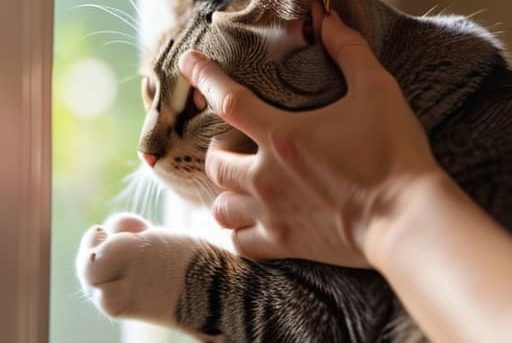
  • 3. Don’t try to be a hero and grab the whole cat at once; that’s how you end up with three new lacerations on your forearms. I prefer the “one-paw-at-a-time” method. If your cat is particularly high-strung, wrap them in a thick towel—what we used to call a “purrito”—so only one limb is exposed. This keeps them contained and calm, and it prevents them from using their back legs to launch themselves off your lap.
  • 4. Once you have the paw, hold it firmly but don’t squeeze like you’re trying to stop a hemorrhage. Place the clipper blade at the very edge of the nail and make a clean, swift snip. Do not saw at the nail; that’s just asking for a jagged edge that will snag on your carpets and cause the cat to pull away mid-trim.
  • 5. If you do accidentally clip too deep and see a bead of blood, do not panic and do not start scrubbing it with alcohol—that’s just going to hurt like hell and make them hate you. Reach for some styptic powder or, if you’re caught without it, a little bit of cornstarch. Press it firmly against the tip of the nail for a solid minute to help the clotting process.
  • 6. Keep the session short. If the cat starts dilated their pupils or their tail starts thumping against the floor, stop immediately. You aren’t going to finish all four paws in one sitting, and that’s perfectly fine. It is much better to do one nail a day for a week than to have a traumatic experience that makes your cat hide under the bed for the next three days.

Understanding Cat Paw Anatomy and Quick to Avoid Disasters

Understanding Cat Paw Anatomy and Quick to Avoid Disasters

Look, you don’t need a degree in biology to do this, but you do need to understand that a cat’s claw isn’t just a piece of keratin like your fingernail. It’s living tissue. When we talk about cat paw anatomy and quick, the “quick” is that pink, fleshy core inside the nail sheath that carries blood vessels and nerves. If you slice into that, your cat isn’t just going to meow; they are going to experience a sharp, stinging pain that will make them view you as a predator rather than a provider. Once that happens, you’ve lost their trust for a week, minimum.

I’ve spent enough time cleaning up bloody paws in exam rooms to know that panic is your worst enemy. If you do nick the quick, don’t scramble for the hydrogen peroxide—that stuff can actually damage the tissue. Instead, have some styptic powder or even a bit of cornstarch on hand for preventing bleeding during nail trim mishaps. It’s a simple physical plug that stops the capillary flow immediately. If you’re using the wrong cat nail clipper types—like those cheap, dull scissors from a grocery store aisle—you’re more likely to crush the nail rather than slice it, which makes the whole process much more traumatic for everyone involved.

The Right Cat Grooming Supplies for a Calm Session

The Right Cat Grooming Supplies for a Calm Session.

Don’t go wandering into the pet aisle and grabbing the first pair of scissors you see. You need proper cat grooming supplies that actually do the job without crushing the nail. In my experience, the best tools are the scissor-style clippers for smaller cats or the heavy-duty plier types for the big, thick-nailed tabbies. If you’re using dull blades, you aren’t cutting; you’re splintering, and that is a one-way ticket to a very stressed-out cat.

I also tell every new owner to keep a tube of styptic powder—or even just cornstarch—within arm’s reach. It’s not about being pessimistic; it’s about preventing bleeding during nail trim if you accidentally nick the quick. If you hit the vein, the cat will panic, and you will panic, and then nobody is winning.

Finally, if you’re dealing with a spicy feline, don’t underestimate the power of calming techniques for cats. I’ve used everything from high-value Churu treats to heavy-duty towel wraps (the “burrito” method) to keep a session manageable. If the cat is panting or their pupils are huge, stop. It’s better to do one nail a day than to end up in an emergency room with a scratched-up face and a traumatized pet.

Five Rules to Keep the Peace (and Your Skin)

  • Stop trying to do the whole cat at once. I’ve seen owners try to power through a full manicure on a stressed tabby, only to end up with a bleeding quick and a cat that won’t let them near them for a month. Trim two claws, give a high-value treat, and walk away. You can finish the rest tomorrow.
  • Watch the body language, not just the claws. If the ears go flat, the tail starts thumping like a drum, or the skin along their spine starts twitching, you are done. Pushing through a “fight or flight” response isn’t being a good owner; it’s just asking for a trip to the ER for a bite wound or a scratched cornea.
  • Keep styptic powder or cornstarch on the counter next to you. Even if you’re careful, you will eventually nick a quick. It happens to the best of us. Don’t panic and start scrubbing the wound—just press the bleeding area firmly into the powder. If you can’t stop the bleeding within five minutes, call the vet.
  • Use the “Burrito Method” if you have a fighter. I used to do this for years with the senior rescues. Wrap them snugly in a thick towel with only one paw exposed. It limits their range of motion and keeps them feeling secure, and it’s much safer for your hands than trying to wrestle a loose limb.
  • Timing is everything. Do not attempt this when they are in “zoomie” mode or right before dinner. Wait for that post-meal lethargy or that specific window of afternoon nap time. A sleepy cat is a cooperative patient; a hungry cat is a predator.

The Bottom Line: When to Stop and When to Call

If you hit a quick and see bleeding, stop immediately; don’t go hunting for styptic powder in a junk drawer while your cat is panicking—just clean it, apply pressure, and call your vet to see if they want you to come in for an antibiotic.

Learn the difference between “my cat is being a jerk” and “my cat is in pain”; if your cat’s behavior changes from typical grumpiness to sudden, aggressive lunging or hiding, they might have an underlying issue like arthritis or a dental problem that makes touching their paws a medical trigger rather than just a grooming nuisance.

Don’t let the “perfect” trim become the enemy of the “good” trim; I’ve seen owners waste hundreds of dollars on specialized grooming tools when all they really needed was a steady hand and the discipline to stop after one nail instead of trying to do all ten at once.

The Difference Between a Trim and a Trauma

“I’ve spent half my career cleaning up blood from owners who thought they could ‘just power through’ a stubborn cat; if you find yourself wrestling a screaming animal just to take off one nail, stop—you aren’t grooming anymore, you’re just building a reason for that cat to never let you touch them again.”

Marlene Ostrowski

Knowing When to Walk Away

Knowing When to Walk Away from cats.

At the end of the day, trimming claws is about finding a rhythm that works for both of you. You’ve got your tools, you know where that pink quick is hiding, and you understand that a single nick isn’t the end of the world—though it’s a bloody mess you’d rather avoid. Remember that it is perfectly okay to stop halfway through if your cat starts looking like they’re ready to stage a coup. It is better to do one claw a day for a week than to force a full session that ends with a scratched face and a broken bond. If you hit a vein, don’t panic; just apply pressure and keep an eye on it, but if the bleeding doesn’t stop within a few minutes, that is when you stop playing nurse and call the vet.

I’ve spent three decades watching people treat grooming like a battle to be won, but it’s really just a small part of the stewardship we owe these animals. When you approach the task with patience instead of frustration, you aren’t just keeping your furniture intact; you are building a level of trust that shows up in how they settle into your lap when they’re old and tired. It isn’t always pretty, and some days you’ll end up with more scratches than trimmed nails, but that’s just the reality of living with a predator. Focus on the consistency over perfection, and eventually, it will become just another quiet moment in a life well-lived together.

Frequently Asked Questions

My cat’s nails are thick and curved like talons; can I just use regular human nail clippers instead of buying special pet ones?

Absolutely not. Don’t even think about it. Human clippers are designed for flat, thin nails; cat claws are thick, curved, and structurally different. If you try to use human tools on “talon-like” nails, you’re likely to crush the nail wall instead of slicing it. That causes a split, which is incredibly painful and leads to infection. It’s worth the twenty dollars for proper pet trimmers to avoid a traumatic vet visit for a cracked claw.

What do I do if I accidentally cut the quick and it starts bleeding heavily?

Deep breaths. First, don’t panic; your cat can smell the adrenaline and it’ll only make them fight harder. Grab some styptic powder—or if you’re empty-handed, cornstarch or flour will do. Pack it firmly against the bleeding tip. If it’s a heavy bleed that won’t stop after five minutes of pressure, call your vet. An infection in the bone is a $1,500 problem you don’t want. For now, keep them quiet and contained.

My cat absolutely loses it and tries to bite me every time I touch their paws; is there a way to do this without sedation?

Look, I’ve spent half my career being bitten by cats who were just terrified, so I get it. If your cat is truly aggressive, stop fighting them. You’re risking a puncture wound that’ll cost you $400 in antibiotics and a clinic visit. Try a “burrito” wrap with a heavy towel to limit movement, or use high-value treats to create a positive association. If they still lose it, talk to your vet about Gabapentin—it’s cheap, safe, and much better than a trip to the ER.

Scratching Posts Fail Because of Where You Put Them

How to stop a cat scratching furniture.

If you’ve spent more than five minutes scrolling through pet blogs, you’ve probably seen someone suggesting you buy a $200 “anti-scratch” training kit or spray your expensive linen sofa with some overpriced citrus mist that smells like a cheap cleaning product. Let me save your money right now: most of those products are a complete waste of time. If you are searching for how to stop a cat scratching furniture, you aren’t looking for a magic spray; you’re looking for a way to understand why your cat thinks your mid-century modern armchair is the best thing since sliced bread. I’ve spent thirty years seeing owners frustrated by “behavioral issues” that were actually just a lack of proper environmental enrichment or, occasionally, a sign of something more clinical.

I’m not going to give you a list of miracle cures that don’t work. Instead, I’m going to tell you what I learned from three decades in a vet clinic and a lifetime of living with cats who have very strong opinions about upholstery. We are going to talk about the actual mechanics of scratching, the cost-effective tools that actually hold up, and how to tell the difference between a bored kitty and a cat that is scratching because they are in pain. No fluff, no expensive nonsense—just practical reality.

Table of Contents

Redirecting Cat Scratching Habits Without Making Them Feel Punished

Redirecting Cat Scratching Habits Without Making Them Feel Punished

First thing you need to understand is that your cat isn’t being a jerk; they are fulfilling feline scratching instincts that are hardwired into their DNA. If you try to punish them—shouting, spraying water, or slapping a paw—you aren’t fixing the behavior; you’re just teaching them to be afraid of you. In my thirty years in the clinic, I’ve seen more “behavioral” issues stem from a broken bond than from actual aggression. Instead of being the enemy, you have to become the provider of better options.

The goal of redirecting cat scratching habits is to make the furniture unappealing and the new post irresistible. Don’t just buy any cheap cardboard slab; look for the best materials for scratching posts, like heavy-duty sisal or wood, that mimic the resistance they crave. Place these new targets directly next to the piece of upholstery they are currently destroying. If they go for the sofa, a firm “no” is fine, but immediately guide them to the post and reward them when they use it. You’re not training a criminal; you’re managing a biological need.

When to Worry Is It Behavior or a Medical Issue

When to Worry Is It Behavior or a Medical Issue

Look, most people assume a cat tearing up the corner of a sofa is just being a nuisance, but after thirty years in a clinic, I’ve learned that sudden changes in scratching patterns are often a cry for help rather than a lack of discipline. If your cat has always been a bit of a shredder, you’re likely dealing with standard feline scratching instincts that just need better outlets. But if a previously well-behaved cat suddenly starts attacking the upholstery, you need to look closer. Is it a sudden increase in frequency? Is it accompanied by over-grooming or hiding?

Sometimes, what looks like a behavioral issue is actually physical discomfort. Arthritis or dental pain can make a cat restless, leading them to seek out textures that provide a specific kind of sensory relief. If they are scratching frantically or seem agitated while doing it, don’t just reach for the cat scratching deterrents; reach for your phone. If the scratching is paired with any changes in litter box habits or appetite, that is a “call the vet today” situation, not a “wait until Monday” situation.

Five things to do before you lose your upholstery (or your mind)

  • Stop buying the cheap, flimsy cardboard scratchers. I’ve seen enough cats ignore a $5 cardboard slab only to destroy a $2,000 linen sofa to prove a point. If the cat is scratching the side of the couch, they want verticality and stability. Get a heavy, tall sisal post that won’t wobble when they put their full weight into it. If it moves, they won’t use it.
  • Location is everything, and I don’t mean “where it looks nice in the living room.” Cats scratch to mark territory, and they do it where they feel most secure or where they hang out. If they’re attacking the arm of the chair, put a scratching post right next to that chair. You can move it once they’ve claimed it, but don’t expect them to migrate to a post in the spare bedroom.
  • Use pheromones, not punishment. I spent decades watching owners try to hiss at or spray cats with water bottles; all that does is make the cat associate you with fear, not the scratching with a problem. Use a synthetic pheromone spray like Feliway on the new post to make it smell like “home,” and use something bitter-tasting on the furniture edges to make the sofa unappealing.
  • Trim those claws regularly. This isn’t just about aesthetics; it’s about damage control. I tell my clients that a well-maintained nail is like a blunt tool rather than a hook. If you’re nervous about doing it yourself, most vets or groomers will do a quick nail trim for a small fee—usually around $15 to $25—and it’s much cheaper than reupholstering a loveseat.
  • Check their stress levels. If a cat that has been fine for five years suddenly starts shredding everything in sight, they aren’t being “bad”—they’re likely anxious. Whether it’s a new pet, a move, or even just a change in your work schedule, that scratching is often a way to self-soothe and mark their space. If the behavior is sudden and frantic, talk to your vet about anxiety management before you start blaming the furniture.

The Bottom Line

The Bottom Line for cat sofa management.

If your cat is suddenly shredding the sofa, check their nails and their stress levels first; if they’re also hiding, lethargic, or skipping meals, stop looking for a scratching post and call the vet tonight.

You can’t punish a cat into better behavior, but you can provide better outlets; invest in high-quality sisal or cardboard textures before you spend a fortune on reupholstering.

Don’t let “it’s just a phase” become a medical crisis—if a behavioral change is sudden and persistent, it’s usually a signal, not just a whim.

The difference between a habit and a cry for help

“If your cat is shredding the sofa because they’re bored, buy a better post; but if they’re suddenly clawing at everything like they’re trying to get something out of their skin, stop looking for a scratching post and start looking for a vet, because that’s usually not a behavior problem—it’s a pain problem.”

Marlene Ostrowski

The Bottom Line

At the end of the day, stopping the destruction of your sofa isn’t about winning a battle of wills against your cat; it’s about understanding why they feel the need to mark that specific corner. If you’ve ruled out the medical stuff—and I mean actually ruled it out with a vet, not just a Google search—then you’re looking at a management game. Invest in the vertical scratching posts, use the deterrent sprays, and make sure they have a way to express that instinct without costing you your security deposit. It’s a process of trial and error, and if you have to swap out three different types of sisal before you find the one they like, that is just part of the job.

I spent three decades watching people get so frustrated with their pets that they almost lost the bond entirely over things like furniture or house training. Don’t let a shredded armchair ruin your relationship with a creature that trusts you completely. Cats don’t have a concept of “property damage”; they just have needs. If you can meet those needs with a little patience and the right gear, you’ll find that the peace in your home is worth much more than a pristine piece of upholstery. Take a breath, buy the post, and remember that they are more than the mess they make.

Frequently Asked Questions

My cat is over ten years old and suddenly started scratching everything; is this just a change in preference or a sign of arthritis?

At ten years old, a sudden change in scratching isn’t a “new preference”—it’s a red flag. If they’re choosing vertical surfaces they used to ignore, they might be trying to stretch to relieve joint stiffness. If they’re scratching at the floor, they might be struggling with mobility. Don’t just buy a new post; get them in for an exam. We’re talking bloodwork and maybe some radiographs. It’ll cost you a few hundred, but it’s better than letting them suffer through chronic pain.

I tried those double-sided sticky tapes on the sofa and it worked, but is there a way to stop the behavior permanently without using deterrents that stress them out?

The sticky tape works because it’s a sensory deterrent, but you’re right—it’s a band-aid, not a cure. To stop this permanently without the stress, you have to address the “why.” Most cats scratch to mark territory or stretch. If you haven’t provided a vertical sisal post that is actually stable—not one that wobbles when they lean into it—they’ll keep going back to the sofa. Give them a high-quality target, use pheromone diffusers like Feliway to lower their baseline anxiety, and make sure they have scent-marking opportunities that aren’t your upholstery.

If I buy a high-end scratching post and they still ignore it for the armchair, am I wasting my money or is there something else I'm missing?

You aren’t necessarily wasting your money, but you might be buying the wrong thing. Cats don’t scratch to be spiteful; they scratch to stretch and mark territory. If they’re choosing the armchair, it’s because the post is likely too small, too wobbly, or the wrong texture. A 5kg cat needs a post that doesn’t budge when they put their full weight into a stretch. If it feels unstable, they’ll go back to the sofa every single time.

Vertical Territory: Shelves, Trees and Window Perches

How to build vertical space for cats.

I once spent forty-five minutes trying to coax a terrified, senior rescue cat out from under a heavy oak sideboard, only to realize he wasn’t hiding because he was sick, but because he felt completely exposed in the middle of the living room. Most people think that buying a $200 carpeted tower from a big-box pet store is the solution, but if you want to learn how to build vertical space for cats that actually works, you have to stop thinking like a consumer and start thinking like a feline. A towering cat tree is useless if it’s wobbling every time they jump, or if it’s placed in the middle of a high-traffic hallway where they feel like targets.

In this guide, I’m going to skip the fluff and the expensive “designer” nonsense to show you how to create real, stable territory. I’ll walk you through the practicalities of shelf placement, the essential physics of making sure your DIY steps don’t collapse under a heavy tomcat, and how to use what you already have in your house to give them the high ground. We aren’t just decorating; we are building a safety net for their mental health.

Table of Contents

Guide Overview

Total Time: 3-5 hours
Estimated Cost: $60-120
Difficulty: Beginner

Tools & Supplies

  • Drill/Driver for mounting brackets and securing wood
  • Level to ensure shelves are straight and safe
  • Measuring tape for precise placement
  • Wood planks or pre-finished floating shelves (3-5 pieces)
  • Heavy-duty L-brackets or wall mounts (set of 10-15)
  • Wall anchors for drywall or masonry screws for studs
  • Carpet scraps or sisal rope for texture
  • Non-toxic wood glue or adhesive for carpet attachment

Step-by-Step Instructions

  • 1. First, you need to assess your floor plan like you’re looking at a patient’s chart. Don’t just throw a cat tree in the middle of the living room and hope for the best. Walk through your house and identify the “dead zones”—those awkward corners or stretches of wall that don’t serve a purpose. You’re looking for paths that allow a cat to move from one side of a room to the other without having to touch the floor. If you have a multi-cat household, this is non-negotiable; you need to ensure they can pass each other without a confrontation.
  • 2. Pick your surfaces. You don’t need to spend $400 on a floor-to-ceiling carpeted tower that will eventually become a glorified scratching post for your sofa. Instead, look at sturdy, flat-topped furniture you already own. A bookshelf that’s been anchored to the wall is a perfect stepping stone. If you’re feeling handy, you can buy simple wooden floating shelves from a hardware store for about $15 a piece. Just make sure they are rated for the weight; a 5kg cat jumping with momentum exerts a lot more force than a 5kg cat just sitting there.
  • 3. Map out the “staircase” effect. Cats aren’t marathon runners; they aren’t going to leap from the floor to a shelf that’s six feet up in one go. You need to create a logical progression of heights. Think of it like a set of stairs. If you have a chair, then a low shelf, then a window perch, you’ve built a route. If there is a massive gap between levels, your cat—especially if they are a senior with a bit of arthritis—will simply give up and stay on the floor.
  • 4. Anchor everything like your life depends on it. This is where people get sloppy and where accidents happen. If a cat jumps onto a shelf and that shelf wobbles or tips, you haven’t built a playground; you’ve built a trip hazard. Use L-brackets or heavy-duty furniture anchors to secure every single shelf and piece of furniture you intend to use. I’ve seen enough “gravity-related” injuries in the clinic to know that a wobbly shelf is a recipe for a broken jaw or a torn ligament.
  • 5. Incorporate “scent stations” and visual interest. A shelf is just a piece of wood until it’s their shelf. Once you have your structure up, rub a little bit of silvervine or catnip on the corners, or better yet, take a clean old T-shirt of yours and drape it over one of the higher levels. They need to feel like they are in their own territory, not just sitting on your decor.
  • 6. Don’t forget the “exit strategy.” Every high perch needs a way down that doesn’t involve a terrifying leap into the unknown. If you have a high shelf that leads to a dead end, your cat might feel cornered and vulnerable. Ensure that every high point has at least two ways to descend, or at least a clear, unobstructed path back down to the ground. A cat that feels trapped is a cat that will stress out, and a stressed cat is a cat that starts peeing on your laundry.

Maximizing Small Apartment Space for Cats Without Breaking the Bank

Maximizing small apartment space for cats without breaking the bank.

Look, I’ve lived in enough cramped apartments to know that you aren’t going to find a wide-open floor plan for a sprawling cat tree. When you’re working with limited square footage, you have to stop thinking about the floor and start thinking about the walls. Instead of buying one of those massive, carpet-covered towers that takes up half your living room and costs more than my first car, look into DIY cat wall shelves. You can use sturdy, pre-finished floating shelves from a hardware store and just add a bit of sisal rope or a scrap of carpet to the top. It’s significantly cheaper, and it keeps the floor clear for your own feet.

The real trick to maximizing small apartment space for cats is creating a continuous loop. A cat doesn’t just want to sit high up; they want to move through the room without touching the ground. If you can link a few wall-mounted cat walkways together, you’ve essentially given them a private highway. Just please, for the love of everything, don’t skip the cat furniture mounting safety check. I have seen too many owners screw a shelf into nothing but drywall, only to have a fifteen-pound tabby go crashing down mid-nap. Use heavy-duty anchors or, better yet, find a stud. If the shelf wobbles when you push it, it’s not going to hold a cat.

The Real Risks of Diy Cat Wall Shelves and Mounting Safety

The Real Risks of Diy Cat Wall Shelves and Mounting Safety.

Look, I’ve seen enough “Pinterest-perfect” living rooms turned into emergency triage rooms to know that DIY cat wall shelves are a double-edged sword. If you aren’t careful, you aren’t building enrichment for indoor cats; you’re building a gravity-fed catapult. Most people underestimate the sheer physics of a twelve-pound cat hitting a shelf at full sprint. If you just screw a piece of plywood into some drywall anchors, that shelf is going to come down with the wall, and your cat is going to end up in my clinic with a fractured jaw or a broken limb. You cannot skip the stud finder. Period.

When you’re working on cat climbing wall installation, you need to be looking for solid wood or metal brackets that bite into the studs. If you’re dealing with plaster or thin drywall, you need to treat it like a construction project, not a craft project. I always tell people to test the weight capacity by applying more force than the cat could ever generate—basically, give it a firm, heavy shove with your own weight. If there is even a millimeter of wobble, it’s not safe. Cat furniture mounting safety isn’t about being overcautious; it’s about making sure your “fun project” doesn’t end in a $1,500 vet bill.

Five Things Your Cat Actually Needs (And What They Don't)

  • Stop thinking about “climbing trees” and start thinking about “escape routes.” A cat doesn’t just want to go up; they want to be able to get from point A to point B without touching the floor. If you put a shelf in the middle of a room but there’s no way for them to jump from the sofa to that shelf, it’s just an expensive piece of floating wood. Map out a continuous path.
  • Check your weight limits twice, then check them again. I’ve seen people try to mount a flimsy piece of pine to drywall using those little plastic anchors you find at the big-box stores. That’s how you end up with a fifteen-pound tabby crashing through a wall and a very expensive vet bill for a broken jaw. If you aren’t hitting a stud, you aren’t mounting a shelf. Period.
  • Don’t forget the “landing pads.” If you’re building a series of steps or shelves, make sure the landing area is wide enough for them to actually turn around or settle down. A narrow ledge is fine for a quick sprint, but if they want to nap up there, they need stability. If they feel like they’re balancing on a tightrope, they won’t use it.
  • Texture matters more than aesthetics. I know, the carpeted cat tree from the pet store looks like an eyesore in your living room, but cats don’t care about your mid-century modern decor. They need grip. If you’re DIY-ing shelves, wrap the edges in sisal rope or a low-pile carpet remnant. If it’s slippery, it’s useless.
  • Watch the “high-traffic” zones. You might think the top of the refrigerator is a great spot, but if you’re constantly bumping into it or if it’s right next to a loud dishwasher, your cat is going to avoid it. They want height, but they also want a sense of security. If the environment is too chaotic, they’ll stay on the floor where it’s predictable.

The Bottom Line: What You Actually Need to Know

Vertical space isn’t a luxury or a way to make your living room look “Pinterest-ready”; for a cat, it is a psychological necessity for feeling safe in a territory. If they can’t get above the floor level, they will live in a state of low-grade stress, which eventually shows up in things like inappropriate urination or aggressive outbursts.

Don’t go overboard with the expensive, designer-branded cat furniture. Most of those “luxury” towers are just glorified carpeted poles that wobble when a ten-pound cat jumps on them. Focus on solid, stable surfaces—real wood or heavy-duty shelving—that won’t budge when they land.

Safety isn’t just about the shelf staying on the wall; it’s about the cat’s physical limits. If you have a senior cat with arthritis or a heavy breed like a Maine Coon, don’t expect them to leap three feet up to a ledge. Build a “staircase” of various heights so they can actually use the space you’ve provided without risking an injury.

## The Real Reason They Need to Climb

“When people ask me why they should bother with shelving or towers, they’re usually thinking about ‘enrichment’ like it’s a luxury item. It isn’t. For a cat, vertical space is about security; it’s the difference between feeling like a predator in their own home and feeling like prey in a hallway. If your cat is constantly pacing or hiding under the sofa, they aren’t being ‘difficult’—they’re looking for the high ground because they don’t feel safe on the floor.”

Marlene Ostrowski

The Bottom Line

The Bottom Line for cat vertical space.

At the end of the day, building vertical space isn’t about buying the most expensive floor-to-ceiling cat tree from a designer catalog. It’s about understanding that your cat sees your home as a 3D map, not a flat floor. Whether you’re repurposing an old bookshelf, securing some sturdy floating shelves, or just clearing off a high mantle, the goal is the same: giving them a way to observe the room without feeling vulnerable. Just remember what I said about the hardware—if you aren’t sure about the weight capacity of your drywall or the strength of your anchors, don’t wing it. A falling shelf is a quick way to turn a fun enrichment project into an expensive, stressful emergency vet visit for a bruised or broken cat.

I’ve spent three decades watching how environment affects behavior, and I can tell you that a cat who feels they have the high ground is a much more stable, confident animal. You don’t need a massive house or a huge budget to make a difference; you just need to look at your rooms from about ten inches off the ground. When you give them those vantage points, you aren’t just decorating; you are investing in their mental health. It’s one of the simplest, most effective ways to prevent the kind of boredom-induced mischief that ends with a scratched sofa or a stressed-out pet. Do it for them, and honestly, do it for your own peace of mind too.

Frequently Asked Questions

My cat is a 15-pound senior with arthritis; is vertical space actually going to help her, or am I just setting her up for a painful jump?

Listen, if you just slap a high shelf on a wall and expect her to leap, you’re asking for a disaster. At 15 pounds with arthritis, she isn’t jumping; she’s navigating. You need “staircase” logic—short, staggered increments. Think of it like a ramp or a series of low, wide landings. If she can’t walk up it without a visible hitch in her gait, it’s too steep. Don’t force the climb.

I’ve seen those cheap carpeted towers at the big-box stores, but are they actually sturdy enough to hold a cat, or am I better off spending the money on wall-mounted wood?

Look, I’ve seen enough cheap towers wobble like a newborn calf to know the truth. Those big-box carpeted trees are fine for a lightweight kitten, but if you have a 5kg tabby with any muscle, they’re going to tip. Once that tree starts swaying, your cat won’t use it—they’ll just watch it from a distance. If you can afford the hardware and the wall space, go with wood. It’s a one-time cost that actually stays put.

If I start adding shelves and perches, how do I know if my cat is actually using them or if I've just wasted a hundred dollars on expensive furniture?

Look, don’t expect them to throw a parade. Cats are subtle. If you’ve spent the money, watch for the “settle.” If they’re sleeping there, or even just sitting on a shelf to watch the birds through a window, it’s working. If they’re still spending twelve hours a day huddled under your coffee table, they either don’t feel safe up high or the perch is too narrow. A cat won’t use a shelf that feels like a tightrope.

Indoor Cats Need Height More Than They Need Space

How to keep an indoor cat happy.

I am so tired of seeing those “enrichment kits” on social media—the ones that cost eighty dollars and consist of a flimsy cardboard box with some dried catnip glued to it. If you think a designer spinning toy is the secret to how to keep an indoor cat happy, you’ve been misled by marketing departments that have never actually had to clean up a cat that’s stopped eating because it’s miserable. I spent nearly thirty years in a clinic watching owners spend a fortune on gadgets while their cats were actually suffering from the same old thing: a complete lack of vertical space and meaningful environmental stimulation.

I’m not here to sell you a subscription box or a luxury feline climbing tree that looks like modern art but serves no purpose. I’m going to tell you what actually works based on decades of observing feline behavior and the physical toll that boredom takes on a cat’s health. We are going to talk about real environmental changes and predictable routines that don’t require a second mortgage. I’ll give you the practical truth about what your cat needs to thrive, and more importantly, I’ll tell you when “boredom” is actually a medical red flag you can’t afford to ignore.

Table of Contents

More Than Just Toys Real Cat Mental Stimulation Ideas

More Than Just Toys Real Cat Mental Stimulation Ideas

Most people think “enrichment” means buying a $50 motorized feather wand from a pet store, but that’s just a temporary distraction. Real indoor cat environmental enrichment is about changing the architecture of their day. If your cat spends eighteen hours a day staring at a baseboard, they aren’t “relaxing”—they are under-stimulated. I always tell owners to think vertically. If you have the floor space, invest in cat climbing trees and shelves. Giving a cat a way to move through a room without touching the floor changes their entire psychological relationship with the house; it turns a flat, boring box into a three-dimensional hunting ground.

You also can’t underestimate the power of scent and sound. I used to use silvervine or catnip to jumpstart a lethargic senior during my fostering days, but even just a window perch with a view of birds can provide hours of passive sensory stimulation. If you’re looking for cat mental stimulation ideas that don’t break the bank, try a “puzzle feeder.” Instead of a bowl, make them work for their kibble. It mimics the effort of a hunt, and frankly, it’s much better for their metabolic health than just vacuuming up food in thirty seconds.

Preventing Feline Boredom Before It Becomes a Behavioral Crisis

Preventing Feline Boredom Before It Becomes a Behavioral Crisis

The problem with most owners is that they wait for the “crisis”—the shredded curtains, the sudden aggression, or the frantic midnight zooming—before they realize something is wrong. By then, you aren’t just dealing with a bored cat; you’re dealing with a stressed one. Preventing feline boredom isn’t about buying a $50 motorized mouse that your cat will ignore after ten minutes. It’s about recognizing the subtle shifts, like a cat who stops grooming themselves or starts staring at a wall for hours. Those are the red flags that their environment has become a cage rather than a home.

Real indoor cat environmental enrichment means thinking in three dimensions. If your cat is spending their entire life on the floor, they are living in a tiny, flat world. I’ve seen countless cats develop urinary issues or obesity simply because they lacked the drive to move. You need to get them up high. Installing cat climbing trees and shelves isn’t just a luxury; it changes their entire psychological perspective of the room. It gives them a sense of security and a way to survey their “territory” without feeling trapped. If you wait until they start acting out to fix the layout, you’re already playing catch-up.

The Essentials: What Actually Works When the Novelty Wears Off

  • Stop buying the $20 elaborate battery-operated towers; they’re just expensive dust collectors once the novelty dies. Get a dozen cheap wand toys and rotate them every three days. If the cat sees the same feather wand every single morning, it’s not a “hunt,” it’s a chore.
  • Vertical space isn’t a luxury; it’s a psychological necessity. A cat that can’t get six feet off the ground feels vulnerable. If you can’t afford floor-to-ceiling cat trees, clear off a bookshelf or a sturdy mantle. They need to be able to survey their kingdom without being cornered by a vacuum or a toddler.
  • Feed them like they’re working for it. If you just dump kibble into a bowl, you’re essentially handing a hunter a pile of processed pellets. Use puzzle feeders or even just a clean egg carton to hide the pieces. It forces them to use their brain and their paws, which burns off that frantic midnight energy.
  • Don’t ignore the “scent” factor. A house that smells only like laundry detergent is a sterile, boring place for a predator. Leave a cardboard box from your latest Amazon delivery on the floor for a few days. The scent of the outside world and the texture of the cardboard provide more mental stimulation than most high-tech gadgets.
  • Watch the weight, because “happy” shouldn’t mean “obese.” I spent half my career managing diabetic cats that were overweight because their owners thought extra treats were a sign of love. If your cat is getting a soft middle, you aren’t spoiling them—you’re shortening their life. Keep the treats minimal and the play sessions high-intensity.

The Bottom Line on Indoor Enrichment

Boredom isn’t just a “cute” quirk; if your cat starts overgrooming themselves bald or acting out aggressively, they aren’t being spiteful—they are telling you their environment has failed them.

You don’t need a hundred-dollar automated gadget from a pet store; a plain cardboard box and a handful of dried silvervine or catnip will do more for their brain than most expensive, battery-operated toys.

Watch the scale, not just the behavior—if a “bored” cat starts putting on weight, it’s often because they’re eating out of stress rather than hunger, and that weight gain is a fast track to diabetes.

The Cost of a Bored Cat

“People think a bored cat is just a nuisance that shreds the curtains, but I’ve seen too many ‘nuisances’ turn into clinical depression or redirected aggression because their world was too small. A cat doesn’t need a room full of expensive, motorized gadgets; they need a predictable environment where they can actually use their instincts, because a cat that has lost its purpose is a cat that starts breaking down physically.”

Marlene Ostrowski

The Bottom Line

The Bottom Line for indoor cat happiness.

At the end of the day, keeping an indoor cat happy isn’t about buying the most expensive automated laser toy or a $200 cat tree from a boutique catalog. It’s about recognizing that your cat is a predator living in a world that has been stripped of its natural rhythms. You need to provide vertical space, scent variety, and enough mental friction to keep their instincts from turning inward. Whether you are rotating toys every week or simply spending fifteen minutes with a wand toy before you sit down for dinner, you are addressing the biological necessity of engagement. If you see them suddenly over-grooming until they have bald patches or if they start acting strangely aggressive, don’t just assume it’s “personality”—that’s often the sign that their environment has failed them and it’s time to pivot your approach.

I’ve spent three decades watching cats go from vibrant, curious hunters to dull, lethargic shadows of themselves simply because their world became too predictable. A happy cat isn’t a decoration in your house; they are a living, breathing creature that requires a sense of purpose. It takes effort, and yes, some of the enrichment tools might cost a bit of money, but investing in their mental health now is far cheaper than treating the chronic stress-related illnesses that follow years of neglect. You don’t have to be perfect, but you do have to be present. Give them a life worth living, even if it’s inside four walls.

Frequently Asked Questions

My cat has suddenly started over-grooming or acting aggressive when I try to play with them; is that just boredom or something medical?

Listen, I’ve seen this a thousand times. If they’re just zooming around or shredding things, it’s boredom. But sudden over-grooming or snapping when you touch them? That’s a red flag. It’s often pain—arthritis, dental issues, or skin allergies—not a bad attitude. If they’re licking themselves raw or hissing when approached, don’t try to “play it away.” Book a vet appointment. You’ll likely be looking at a physical exam and maybe some bloodwork, which could run $150–$300, but it’s better than letting them suffer.

I've seen people suggest expensive automated toys, but are they actually worth the money or are they just a waste of cash?

Look, I’ve seen people drop $200 on a motorized laser tower only to have their cat ignore it after ten minutes. Most of those gadgets are just expensive distractions. If you have the budget, a high-quality automated feeder or a reliable water fountain is a solid investment for long-term health. But for actual play? Save your money. A crumpled piece of paper or a $2 wand toy works better because you can vary the movement.

How do I know if my cat is actually "engaged" with the enrichment I'm providing, or if they're just tolerating it?

Look for the “active hunt.” If they’re just batting a ball once and walking away, they’re tolerating it. Real engagement looks like dilated pupils, twitching ears, and that focused, low-to-the-ground stalk. You want to see them actually using their predatory drive. If they’re ignoring the new perch or the puzzle feeder entirely, don’t just keep throwing money at more toys—change the stimulus. They aren’t being “difficult”; they’re just bored with the same old routine.

Cats Fighting: Resources Usually Fix It

Tips on how to stop cats fighting.

I’ve spent three decades listening to people describe the sound of fur flying and hissing matches that sound more like a demon summoning than a domestic pet. Most of the advice you’ll find online about how to stop cats fighting is either way too expensive or way too soft—telling you to buy a $200 pheromone diffuser and just “hope for the best.” Let me tell you from experience: a plug-in gadget isn’t going to fix a territorial dispute or a redirected aggression incident that just sent your tabby into a blind rage. If you’re looking for a magical spray to make the tension vanish, you’re in the wrong place, but if you want to know why they’re actually lunging, I can help.

I’m not here to sell you anything or sugarcoat the reality of living with combative animals. I’m going to give you the unvarnished truth about when a spat is just a social correction and when it’s a medical emergency that requires a vet visit before someone loses an eye. We’ll talk about environmental management, the actual costs of behavioral medication, and how to tell the difference between a grudge and a crisis. No fluff, just the practical reality of keeping your peace and your pets safe.

Table of Contents

Recognizing the Real Signs of Cat Conflict

Recognizing the Real Signs of Cat Conflict.

You have to learn to read the room before the claws come out. Most people wait until they hear a crash or a scream, but by then, the damage is usually done. I’ve spent enough years in exam rooms to know that the real signs of cat conflict start much earlier with the “silent war.” Look for the subtle shifts: a tail that won’t stop twitching, ears pinned slightly back, or one cat suddenly deciding they no longer want to sleep on the sofa because the other one is occupying the airspace. If they are just staring each other down from across the hallway, they are communicating a boundary. That’s a warning shot.

However, there is a line between posturing and a crisis. If you see one cat actively hiding, refusing to eat, or spending all their time under the bed, you aren’t just dealing with a spat; you’re dealing with serious feline behavioral issues that can lead to chronic stress and physical illness. If the fighting involves actual fur flying or blood, stop trying to mediate it yourself. You need to start separating fighting cats immediately to prevent a cycle of trauma that no amount of cat pheromone diffusers is going to fix.

When to Start Separating Fighting Cats Immediately

When to Start Separating Fighting Cats Immediately.

There is a massive difference between two cats who hiss at each other from across the room and a situation where you need to start separating fighting cats right this second. If you walk into a room and see fur flying, ears pinned flat against the skull, and one cat actually attempting to bite or claw the other’s throat, the truce is over. You don’t wait for them to “work it out.” You intervene—carefully, using a piece of cardboard or a thick towel to break their line of sight—and you put them in different rooms.

You also need to pull them apart if you see the silent tension that precedes a blowout. If one cat is constantly being cornered, or if one is spending all its time hiding under the bed and refusing to eat, you are dealing with more than just a spat. This is where multi-cat household management gets difficult. If the stress is high enough that they are stopping their normal routines, you have to reset. It’s better to deal with the headache of extra feeding stations and separate litter boxes now than to deal with a vet bill for a deep abscess or a torn ear later.

Five ways to actually fix the tension (without losing your mind)

  • Stop the “resource wars” by doubling everything. If you have two cats, you need three litter boxes, three water bowls, and three separate feeding stations in different corners of the house. I’ve seen countless fights triggered simply because one cat decided to “guard” the only water bowl in the kitchen, turning a thirsty kitten into a territorial bully.
  • Use pheromones, but don’t expect a miracle. Feliway diffusers can take the edge off a tense household, but they aren’t a magic wand. Think of them as a calming background hum rather than a sedative. If you’re spending $50 on a plug-in and nothing changes in ten days, the issue isn’t “stress”—it’s likely a medical or behavioral problem that requires a different approach.
  • Scent swapping is your best friend for reintroduction. Take a clean sock, rub it on one cat’s cheeks, and leave it near the other cat’s food bowl. You want them to associate the “smell of the enemy” with the “smell of something good.” It’s slow work, and it might take a week, but it’s better than letting them stare each other down through a cracked door.
  • Check for the “hidden” culprit: pain. I cannot stress this enough. If two cats who used to be fine suddenly start lunging at each other, one of them is likely hurting. A cat with dental pain or early-stage arthritis is going to be irritable, and a grumpy cat is a reactive cat. If the behavior change was sudden, don’t bother with behavior training; get them to the vet for bloodwork and a physical exam.
  • Vertical space is non-negotiable. When cats fight on the floor, they’re trapped. If you have cat trees, wall shelves, or even just a cleared-off bookshelf, you give them an escape route. A cat that can climb “up” to get away from a confrontation is a cat that doesn’t feel the need to fight to defend its space.

The bottom line for your living room

Learn the difference between a loud argument and a physical fight; if you see fur flying, skin being torn, or one cat hiding and refusing to eat, you aren’t dealing with a “spat”—you’re dealing with a medical or behavioral crisis that needs professional intervention.

Stop looking for a “home remedy” to fix aggression; once cats have established a pattern of violence, you need to focus on environmental management—like adding more litter boxes and vertical space—rather than hoping they’ll just “get over it.”

Don’t let the cost of a vet visit keep you from checking for underlying pain; a cat that is suddenly aggressive is often a cat that is hurting, and if you wait until they are too sick to move to address the pain, you’ve already lost the battle.

The difference between a spat and a crisis

“Don’t get caught up in the ‘personality’ of your cats when they’re actually hurting each other. There is a massive, life-altering difference between two cats who hiss at each other from across the living room and two cats who are actually drawing blood or making one of them too terrified to use the litter box. One needs a new layout of your furniture; the other needs a vet and a serious intervention before someone ends up in the ER.”

Marlene Ostrowski

The Bottom Line

The Bottom Line for feline behavioral crises.

At the end of the day, you have to distinguish between a bit of posturing and a genuine breakdown in peace. If you’ve seen fur flying, skin broken, or a cat hiding in the back of a closet refusing to eat, you aren’t dealing with a “personality clash”—you’re dealing with a medical or behavioral crisis. Remember that physical aggression is often just a symptom of something else, like chronic pain or a sudden hormonal shift, so don’t be afraid to rule out the medical stuff first. Whether you decide to implement a slow reintroduction or you’re bracing yourself for the cost of a behavioral specialist, the goal is to stop the cycle before someone—human or feline—gets permanently hurt.

I know how exhausting it is to walk on eggshells in your own living room, constantly listening for the hiss or the thud of a body hitting the floor. It’s draining, and it’s okay to admit that it’s hard. But please, don’t let the stress make you settle for a household defined by fear. You can fix this, even if it takes weeks of pheromone diffusers, separate feeding stations, and a lot of patience. It isn’t about forcing them to be best friends; it’s about creating a safe environment where they can coexist without looking over their shoulders. You’ve got this, and your cats deserve a home that feels like a sanctuary again.

Frequently Asked Questions

Is it just "play fighting" or is one of them actually getting hurt?

Look, I’ve spent half my career cleaning up wounds that owners thought were “just playing.” If they’re wrestling, you’ll see silent movement, soft paws, and no fur flying. But if you hear guttural growling, see ears pinned flat, or find tufts of hair on the floor, that isn’t a game—it’s a fight. If one cat is hiding or stops eating, the stress is real. Check for any skin breaks; even a tiny puncture can abscess by Tuesday.

If I separate them now, am I just making the resentment worse in the long run?

No, you aren’t. That’s a common fear, but you can’t “train” a cat out of a physical fight by letting them keep fighting. You’re just teaching them that violence is the only way to communicate. Separation isn’t a punishment; it’s a circuit breaker. It lowers the cortisol levels so they can actually think again. It’s much easier to reintroduce two calm cats than two cats that have become genuine enemies.

How much is this going to cost me in vet bills if I don't fix the behavior immediately?

Look, if you ignore a behavioral spat and it turns into a physical fight, you aren’t just paying for a behavioral consult—which runs about $150 to $250—you’re paying for the fallout. One bite or scratch can lead to an abscess that requires sedation, draining, and antibiotics, easily hitting $400. If they tear up an eye or cause a puncture, you’re looking at emergency visits and specialists. It’s much cheaper to fix the tension now than to treat a wound later.

Introducing Cats: Three Weeks, Not Three Days

Tips on how to introduce two cats.

I’ve spent three decades watching people follow “expert” advice from glossy websites that suggest you need a $200 pheromone diffuser and a specialized “calming suite” to figure out how to introduce two cats. Let me tell you something: those gadgets won’t stop a territorial ambush, and they certainly won’t fix a fundamental personality clash. I’ve seen owners spend a fortune on “calming aids” only to end up in my clinic years later with a cat that has developed chronic urinary issues from pure, unadulterated stress. You don’t need a magic spray; you need a realistic understanding of feline body language and the patience to realize that sometimes, “success” just means they stop trying to kill each other in the hallway.

I’m not here to sell you a lifestyle or promise that your new kitten and your grumpy senior will be best friends by Tuesday. I’m going to give you the clinical reality of what works, what’s a waste of your money, and when to step in versus when to let them work it out. We’re going to talk about scent swapping, visual barriers, and the specific red flags that mean you need to reset the clock immediately.

Table of Contents

Creating a Safe Space for New Kitten Survival

Creating a Safe Space for New Kitten Survival

Before you even think about letting them sniff each other, you need to set up a base camp. I’m talking about a separate room—a bathroom or a spare bedroom—that belongs entirely to the newcomer. This isn’t just about giving them a place to nap; it’s about preventing the kind of cat territorial behavior that leads to a house full of hissing and broken furniture. They need their own litter box, their own water, and their own food, physically separated from the resident cat. If they can see each other through a glass door or a cracked door, that’s fine, but they shouldn’t be sharing air yet.

I’ve seen too many people skip this step because they think their cats are “chill,” only to end up with a bloody nose and a vet bill for a torn ear. If you want to give yourself a fighting chance, plug in a Feliway diffuser for new cats in that base camp room. While I’m always a bit skeptical of anything marketed as a “miracle cure,” the cat pheromone therapy benefits are real for lowering the baseline cortisol levels in a stressed kitten. It won’t solve a fight, but it might stop the constant, low-level tension that makes an explosion inevitable.

Using a Feliway Diffuser for New Cats Effectively

Using a Feliway Diffuser for New Cats Effectively.

Now, let’s talk about the stuff you can buy at the pet store to help, because people love to treat these things like magic potions. You’ll see a lot of talk about feliway diffuser for new cats, and while it isn’t a miracle cure, it can take the edge off the tension. These diffusers mimic the facial pheromones a mother cat uses to soothe her kittens. It won’t stop a full-blown fight, but it can help dampen the signs of cat territorial behavior—like that frantic, obsessive spraying or the constant, high-pitched yowling at the door—that make your house feel like a war zone.

If you’re going to use it, don’t just plug it in and hope for the best. You need to plug it in in the “safe zone” you’ve already set up for the newcomer, not just in the hallway. And for heaven’s sake, give it time. It takes about two to four weeks for the concentration of pheromones to stabilize in the air. If you’re seeing actual cat aggression during introduction—I mean teeth, claws, and fur flying—a diffuser isn’t going to fix that. At that point, you need to go back to physical separation, not more aromatherapy.

Five Rules for Not Letting Your Living Room Turn Into a War Zone

  • Scent swapping is non-negotiable. Don’t just let them sniff each other’s faces; take a clean sock, rub it on the new cat’s cheeks, and leave it near the resident cat’s food bowl. If they hiss at the sock, that’s fine. If they won’t eat near the scent, you’ve moved too fast.
  • Watch the “body language” vs. the “noise.” A little low growling or a hiss is just them setting boundaries—it’s how cats communicate. But if you see fur flying, ears pinned flat against the skull, or one cat is cornered and panting, you break it up immediately. That’s not “settling in,” that’s a fight.
  • Feed them on opposite sides of a closed door. I’m talking about a solid barrier. They need to associate the smell of the other cat with the best thing in their lives: mealtime. If you’re using a high-value wet food, do it. If they aren’t eating because they’re too stressed by the proximity, you need to put more distance between them.
  • Don’t skip the vertical space. If your resident cat feels like they have to walk across the floor to get to the litter box and they run into the newcomer, you’re asking for a scrap. Make sure there are cat trees, shelves, or even just cleared-off counters so they can bypass each other without a confrontation.
  • Manage your own expectations on the timeline. People ask me, “Marlene, how long until they’re friends?” The answer is: I don’t know, and it might be six months. Some cats bond in a week; some cats just reach a state of “mutual tolerance” where they stop trying to kill each other. Aim for tolerance first. Friendship is a luxury.

The Bottom Line: When to Push On and When to Back Off

Don’t mistake a little hissing for a war zone; a bit of posturing is normal, but if you see a cat stopping eating, drinking, or using the litter box, the stress has turned medical, and you need to reset the clock.

Pheromones and treats are supplements, not solutions—they won’t fix a bad introduction if you’re forcing two territorial animals into the same room before they’ve even sniffed each other through a door.

Watch the body language, not just the noise; a silent, staring cat is often much more dangerous than one that’s making a fuss, so learn the difference between a “back off” swat and a “this is happening” fight.

## The Myth of the Instant Best Friend

“I’ve spent three decades watching people try to force a ‘cute’ reunion by putting two cats in a room together because they ‘look like they’ll get along,’ only to end up with a scratched-up owner and a cat that won’t eat for three days. You aren’t being mean by keeping them separated; you’re being smart. If they aren’t communicating through a door or a screen, they aren’t ready for the living room, and forcing it won’t fix the temperament—it just breaks the trust.”

Marlene Ostrowski

When to Call It a Day (Or a Week)

When to Call It a Day (Or a Week)

At the end of the day, introducing cats isn’t a linear process. You can have the perfect Feliway setup, the most secure base camp, and a schedule that would make a drill sergeant proud, but cats don’t care about your spreadsheets. If you’ve done the slow introductions, managed the scent swapping, and kept the visual contact controlled, you’ve done your part. However, you need to know when to pivot. If you see sustained, aggressive physical combat—I mean actual fur flying and blood drawn, not just a hissed warning—you stop the process immediately. If one cat stops eating or starts hiding for more than twenty-four hours, that’s not just “stress,” that’s a medical red flag that needs a vet’s eyes. Don’t try to “tough it out” to prove you’re a good owner; listen to the animals, not your ego.

I know how exhausting this is. I’ve spent many a night sitting on the floor between two hissing cats, wondering if I’d made a massive mistake bringing a new soul into the house. It feels like you’re failing when they won’t bond on your timeline, but peace in a multi-cat household is often built in inches, not miles. Most of the time, they don’t need to be best friends who nap together; they just need to reach a state of peaceful coexistence where they can share a room without a riot. Be patient, keep your cool, and remember that some of the best bonds take the longest to forge. You’ve got this.

Frequently Asked Questions

My cats are already hissing and swatting through the door; does this mean the slow introduction method has failed?

No, it hasn’t failed, but you’ve hit the “tension phase.” Hissing and swatting through a door is actually normal—it’s them setting boundaries without actually getting hurt. It’s better they do it through a piece of wood than across your living room rug. However, if the hissing turns into frantic, non-stop yowling or if one cat stops eating or using the litter box, you’ve moved past “tension” and into “stress.” Back up a step.

How much am I actually going to spend on pheromone diffusers and calming supplements if this takes months?

Let’s talk numbers, because “peace of mind” doesn’t pay the bills. A Feliway diffuser is about $40 to $50 for a starter kit, plus $15–$20 for refills every month. If you’re adding calming chews—which are hit or miss, by the way—budget another $30 a month. If this drags on for three months, you’re looking at roughly $200. It’s an investment, but it’s cheaper than a vet visit for stress-induced cystitis.

At what point does "normal territorial behavior" turn into a medical emergency that requires a vet visit?

Look, there’s a line between “I hate that new guy” and “I am physically dying.” If they’re just hissing or swatting, they’re being jerks—that’s territorial. But if you see a cat hiding and refusing to eat for more than 24 hours, or if they stop using the litter box, that’s a medical emergency. Stress can trigger urinary blockages, especially in males, which can kill them in a day. If they aren’t eating, call the vet.

Cat Litter: What They Prefer Versus What You Prefer

Guide on how to choose cat litter.

I spent nearly three decades in a clinic where I saw everything from expensive, “boutique” litters that did nothing but track gray dust across the lobby, to owners who bought the cheapest possible sawdust because they were trying to make ends meet. There is a massive, expensive lie being sold in the pet aisle right now that you need a “specialized formula” for every single life stage of your cat. Honestly, most of those fancy marketing claims are just expensive fluff designed to pad a corporate bottom line. If you’re staring at a wall of colorful bags trying to figure out how to choose cat litter that won’t leave your house smelling like a kennel or your floors covered in grit, you don’t need a lifestyle brand; you need to understand the chemistry of what’s actually in the bag.

I’m not here to sell you on a specific brand or tell you that a $40 bag of scented crystals is the magic cure for a messy house. I’m going to give you the unvarnished truth about clumping vs. non-clumping, the real cost of dust inhalation for your respiratory system, and the specific signs that your litter choice is actually making your cat avoid the box. We’re going to look at the numbers, the practicalities, and the red flags so you can stop wasting money on things that don’t work.

Table of Contents

Clay vs Natural Cat Litter Whats Actually Worth Your Money

Clay vs Natural Cat Litter Whats Actually Worth Your Money

Look, I’ve spent decades cleaning up messes in exam rooms, and I can tell you that the debate between clay vs natural cat litter usually comes down to two things: your budget and how much you hate sweeping your floors. Clay is the old reliable. It’s cheap, it clumps like a dream, and it’s usually the best cat litter for odor control because it’s heavy and dense. But here’s the catch—it’s dusty. If you have a cat with respiratory issues or a human with allergies, that fine silica dust is going to find its way into your lungs and their nose.

On the other hand, you have all these non-toxic cat litter options made from corn, wheat, or pine. These are great because they’re biodegradable and much easier on the environment, but they aren’t magic. Some of them turn into a literal brick of mush if you don’t scoop them twice a day, and others can actually attract bugs if you leave them sitting too long. If you go natural, just make sure you aren’t trading one problem for another. You want something that works, not something that just makes you feel better about your carbon footprint while your house smells like a farm.

The Real Truth About Scented vs Unscented Litter Options

The Real Truth About Scented vs Unscented Litter Options.

Here is the truth that most pet store aisles try to hide behind pretty packaging: your cat doesn’t care if their bathroom smells like “Spring Meadow” or “Lavender Fields,” but their nose certainly does. Cats have a sense of smell that makes ours look like we’re living in a sensory deprivation tank. When you buy heavily scented products, you aren’t actually removing the ammonia from the waste; you are just layering a cheap floral perfume over a pile of biological sludge. In my experience, this is a recipe for disaster. If a cat finds their litter box chemically overwhelming, they won’t just complain—they’ll find a soft rug or a pile of laundry to use instead.

If you are looking for the best cat litter for odor control, stop looking for the strongest fragrance and start looking for better absorption. Unscented options, especially those using high-quality bentonite or certain biodegradable litter materials, tend to do a much better job of neutralizing the actual scent molecules rather than just masking them. If you have a multi-cat household or a senior cat with a heavy bladder, stick to unscented. It’s cheaper, it’s easier on their respiratory systems, and it keeps them from making your living room their new bathroom.

Five Things Your Wallet and Your Cat’s Bladder Will Thank You For

  • Stop buying the biggest bag just because the price per pound looks better; if the clumping isn’t tight, you’re going to end up scooping wet, mushy sludge that sticks to the bottom of the box, which means you’ll be dumping the whole thing more often than you should.
  • Watch the tracking—if you find yourself vacuuming “sand” out of your rug every single day, you aren’t saving money, you’re just paying for a cleaning service, so look for larger grain sizes or pellets if you’re tired of the grit.
  • Pay attention to how much dust is kicking up when you scoop; I’ve seen plenty of cats develop respiratory issues or “sneezing fits” because owners bought the cheap, dusty stuff that turns into a fine powder the second it hits the air.
  • If you have a multi-cat household, you cannot skimp on the depth; you need at least three inches of litter so they can actually bury the waste, because if they can’t hide the smell, they’ll start finding “alternative” spots like your laundry basket or the rug.
  • Monitor the “clump integrity” like a hawk, especially with older cats; if the litter doesn’t form a solid ball immediately, the urine soaks through to the bottom, which leads to skin irritation or UTIs from them sitting in a damp, bacteria-filled box.

The Bottom Line: What You’re Actually Buying

Stop chasing the lowest price per bag; if you’re buying cheap, low-quality clay that doesn’t clump properly, you’ll end up scooping twice as often and replacing the whole box in half the time, which costs you more in the long run.

If your cat starts avoiding the box or you notice them straining, check your litter choice immediately—some of those heavy, clumping clays can cause issues for senior cats or those prone to urinary blockages.

If you can smell the litter from across the room, it’s not working; you either need better absorption or you need to stop masking the problem with heavy perfumes that are just going to irritate your cat’s nose and your own lungs.

The Hidden Cost of Cheap Clumping

Stop looking at the price per bag and start looking at the cost of a neglected bladder; if you buy a cheap, dusty clay that clumps like wet cement, your cat is going to stop using the box, and by the time you realize they’re urinating on your rug, you’re looking at a three-hundred-dollar vet bill for a urinary blockage instead of a ten-dollar bag of decent litter.

Marlene Ostrowski

The Bottom Line on the Box

The Bottom Line on the Box.

At the end of the day, picking a litter isn’t about finding a magical product that cleans itself; it’s about managing the trade-offs between your wallet, your nose, and your cat’s biology. If you go with cheap clay, you’re saving a few bucks now but paying for it later in dust and tracking. If you go natural, you’re being kind to the environment and their lungs, but you’d better be prepared to scoop more frequently to avoid a mess. Remember, the best litter is the one that keeps your cat consistently using the box without making you feel like you’re living in a dusty, scented warehouse. Watch their habits—if they start avoiding the box or straining, no amount of premium clumping sand is going to fix a medical issue.

I’ve spent three decades watching owners overlook the small things until they became big, expensive emergencies. Choosing the right litter is one of those small things that keeps your home peaceful and your cat comfortable. Don’t get paralyzed by the endless aisles of options or the marketing jargon on the bags; just trust your eyes and your cat’s behavior. You aren’t just buying sand or pellets; you’re buying a little bit of daily sanity. Take care of the basics, keep an eye on their output, and you’ll be doing more for their well-being than you realize.

Frequently Asked Questions

My cat is starting to pee outside the box; is it the litter itself, or am I looking at a UTI or something more serious?

Look, if they’re peeing outside the box, you have to play detective. If they’re squatting and nothing comes out, or they’re straining and crying, get to an emergency vet tonight—that’s a blockage, and it’s fatal within 24 to 48 hours. If it’s just a mess on the rug, it could be a UTI or crystals, or they just hate the texture of that new clay you bought. Don’t guess; get a urinalysis done.

Is there a real difference in cost between using a high-end clumping litter versus just buying the cheap stuff and scooping more often?

Look, I’ve seen people try to “save” money by buying the cheap, non-clumping dust by the bagful, and it almost always backfires. You aren’t just scooping more; you’re cleaning the whole box more often because the urine hits the bottom and turns the entire tray into a swamp. You’ll end up spending more on litter—and more on your sanity—than if you’d just bought the high-end stuff that actually stays put.

How much dust am I actually breathing in, and is it going to cause my senior cat respiratory issues?

Look, if you’re seeing a fine layer of silt on your baseboards, you’re breathing it, and so is your cat. For a senior with existing respiratory issues, that fine silica dust is a trigger, plain and simple. It’s not just “dust”; it’s particulate matter hitting their lungs. If they’re wheezing more or coughing after you scoop, stop using cheap clay immediately. Switch to a high-quality, low-dust pellet or a heavy natural substrate. It costs more upfront, but it’s cheaper than an emergency oxygen session.

The Litter Box Maths Most Households Get Wrong

How many litter boxes a cat needs.

I’ve spent thirty years watching owners walk into my clinic with a cat that is straining, crying, or—worst of all—soaking the rug because they were following some “lifestyle” blog that suggested one designer, scented litter box was plenty. People love to overcomplicate things with expensive crystals and scented grains, but they completely miss the biological reality of the animal. When you start Googling how many litter boxes a cat needs, you’ll find a lot of fluff about “feline enrichment,” but what you actually need to know is the math of preventing a urinary blockage. I’ve seen too many cats end up in an emergency ICU—costing you a thousand dollars or more in a single night—simply because their owner didn’t realize that one box isn’t just “inconvenient,” it’s a medical risk.

I’m not here to sell you a subscription to a monthly litter delivery service or tell you that your cat needs a custom-built furniture enclosure. I’m going to give you the unvarnished truth based on three decades of seeing what happens when the math is wrong. I’ll tell you exactly how many trays you need to keep, how to spot the difference between a “grumpy” cat and a dying one, and why your current setup might be a ticking time bomb for your wallet.

Table of Contents

The Cat Litter Box Ratio Rule You Cant Ignore

The Cat Litter Box Ratio Rule You Cant Ignore

The math is simple, but people always try to negotiate with it. The standard cat litter box ratio rule is N+1. That means if you have one cat, you need two boxes; if you have three cats, you need four. I know, it sounds excessive when you’re looking at your floor space, but you aren’t just providing a toilet; you’re providing options. In a multi-cat household, a single box becomes a contested territory. If one cat is a bully or even just a “territorial lingerer,” the other cats will start looking for alternative places to go—like your laundry basket or the edge of your rug.

When you’re managing multiple cats’ bathroom needs, you have to stop thinking about convenience and start thinking about feline psychology. A cat doesn’t think, “I’ll just wait until the other cat is done.” They think, “That box is occupied, and I’m not taking a risk.” If you start seeing signs of litter box aversion, like a cat suddenly urinating on a tiled floor or near a window, don’t assume they are being spiteful. They are telling you the current setup is failing them. It’s usually not a behavior problem; it’s a math problem.

Managing Multiple Cats Bathroom Needs Without the Chaos

Managing Multiple Cats Bathroom Needs Without the Chaos

When you’re managing multiple cats’ bathroom needs, the biggest mistake people make is thinking they can just stack three boxes in one corner of the laundry room. That’s not three stations; that’s one station with three options. If your cats are territorial, they’ll view that corner as a single “zone,” and if one cat decides to guard it, the others are effectively locked out. To avoid signs of litter box aversion, you have to spread them out. Think of it like bathroom access in a large house—you wouldn’t put every single toilet in one tiny closet and expect people to be happy.

Placement is just as vital as the count. I always tell owners that the best locations for cat litter boxes are in quiet, low-traffic areas where a cat won’t feel ambushed, but they shouldn’t be tucked behind a heavy door that might accidentally slam shut. You want them accessible but private. If you have a multi-story home, put a box on each floor. It’s an extra $30 and a bit of floor space, but it’s much cheaper than the $400 vet bill for a urinary blockage because a cat was too intimidated to walk down the stairs.

Five Practical Realities of the Litter Box Setup

  • Don’t group the boxes together. If you put three boxes in one laundry room, you haven’t given your cat three options; you’ve given them one big, smelly option. Spread them out—one in the living area, one in a quiet corner, one in the basement—so a cat doesn’t feel “trapped” in one part of the house by another cat.
  • Watch the “straining” signs. If you see a cat hovering over the box or spending ten minutes in there only to produce nothing, that isn’t a litter box math problem, it’s a medical emergency. If it’s a male cat, that’s a potential urinary blockage, and you’ll be paying an emergency vet fee upwards of $500 to $1,000 before the sun comes up.
  • Size matters more than the count. I’ve seen people buy three tiny, hooded trays for a 6kg cat, and it’s useless. The box needs to be at least 1.5 times the length of the cat from nose to base of tail. If they can’t turn around comfortably, they’ll start treating your rug like a bathroom instead.
  • The “Scoop or Quit” rule. In my thirty years, I never saw a cat “forget” how to use a box; I saw owners who waited too long to clean them. If you have three cats, you are scooping every single day. If you skip a day, you’re essentially asking a clean animal to go in a pile of waste, and they will find a cleaner spot—like your bed.
  • Avoid the “hooded box” trap unless you have no choice. Those covered boxes look tidy, but they trap ammonia. If the smell is concentrated in a small plastic cave, the cat won’t want to go in there. Open-top boxes are easier to clean, easier to monitor for health issues, and much less likely to become a localized biohazard in your hallway.

The Bottom Line: Don't Wait for a Symptom to Add a Box

Follow the N+1 rule—one box per cat, plus one extra—not because it’s a suggestion, but because it’s the most effective way to prevent urinary blockages and stress-induced cystitis.

Watch for “box avoidance” behaviors like straining, crying, or going outside the box; if you see these, adding a box might help, but you’re likely already looking at an urgent vet visit.

Location matters as much as quantity; if you put three boxes in the same laundry room, you might as well only have one, because a dominant cat can “guard” that single doorway.

The Cost of Cutting Corners

“I’ve spent too many nights in the ER treating cats for urinary obstructions that could have been prevented by a twenty-dollar plastic tray and a little more floor space. People think adding a second or third box is a nuisance, but in my experience, it’s a lot cheaper and a lot less traumatic than a three-thousand-dollar surgical emergency because your cat decided they didn’t like the ‘vibe’ of their only bathroom.”

Marlene Ostrowski

The Bottom Line on Boxes

The Bottom Line on Boxes for cats.

At the end of the day, the math is simple even if it feels like overkill to your floor plan: N+1 is the standard for a reason. If you have one cat, you need two boxes; if you have three, you need four. I’ve seen too many owners try to “save space” only to end up in my old clinic’s exam room with a cat suffering from cystitis or a urinary blockage because they were too stressed to use a single, shared tray. Remember that placement matters as much as quantity—don’t tuck every single box into one cramped laundry room corner where a cat feels trapped. If you see a change in their bathroom habits, don’t assume it’s just a behavioral quirk; treat it as a signal that their environment or their bladder is failing them.

Providing extra litter boxes isn’t about being a “fussy” pet owner; it is about removing the friction between your cat and their basic biological needs. It is much cheaper to buy a plastic tray today than it is to pay an emergency vet technician to catheterize a straining male cat at three in the morning. You are their advocate, their guardian, and the only one who can interpret their silence. When you get the setup right, you aren’t just managing waste—you are providing the peace of mind that allows an animal to feel truly safe in their own home.

Frequently Asked Questions

What if my cat is still using the box but only doing a little bit at a time—is that a behavior issue or something more serious?

If your cat is “micro-peeing”—going a little bit every time—stop looking for behavior training and start looking for a vet. In my experience, that’s rarely a grudge against the litter; it’s usually a sign of discomfort. They feel the urge, they go, but it hurts too much to finish, so they stop. Whether it’s a UTI or a blockage, that’s a “go to the emergency vet tonight” situation, not a “wait and see” one.

Is there a point where having too many boxes actually causes more problems than it solves?

Look, I’ve seen people turn their laundry rooms into literal sand pits because they’re terrified of a single missed scoop. Honestly? You can overdo it. If you have ten boxes for two cats, you aren’t “ensuring cleanliness”; you’re just creating more surfaces for dust, tracking, and bacteria to hide. Once you hit that N+1 ratio, stop. More boxes won’t fix a behavioral issue or a UTI—it just makes your vacuuming job a nightmare.

If I can't afford to buy three or four extra boxes right now, what's the absolute minimum I can get away with before I'm risking a urinary blockage?

Look, I get it. A sudden trip to the pet store for three more trays isn’t always in the budget. If you’re flying solo with one cat, you need at least two boxes. If you have two cats, you need three. If you drop below that “N+1” rule, you’re playing a dangerous game with their bladder. If they start straining or going outside the box, that’s not a behavioral issue—it’s a medical emergency.

A Cat Peeing Outside the Box Is Telling You Something

Why a cat stops using the litter box.

I’ve spent thirty years cleaning up messes that people thought were “spiteful.” I can still smell the ammonia from that one Tuesday morning in the clinic when a frantic owner insisted their cat was just being a jerk because they’d peed on the rug. Let me tell you something: cats don’t do anything out of spite; they do things because they are uncomfortable. When you start wondering why a cat stops using the litter box, you aren’t dealing with a behavioral mastermind—you’re usually dealing with a creature that is either in pain or deeply confused by its environment.

I’m not here to sell you a $50 “calming pheromone” spray or tell you to buy a more expensive brand of scented clay. I’m going to tell you the truth about what’s actually happening in that bladder or that brain. I’ll help you distinguish between a simple litter box preference and a life-threatening urinary blockage that requires an emergency vet visit at 2:00 AM. We’re going to look at the real culprits—from crystals and UTIs to stress and substrate changes—and I’ll give you a straight answer on when to wait and when to run.

Table of Contents

Decoding Cat Behavioral Changes and Stress

Decoding Cat Behavioral Changes and Stress.

Most of the time, when a cat starts avoiding the box, it isn’t because they’re being spiteful—it’s because they’re stressed. I’ve seen it a thousand times: a new baby arrives, a move happens, or even just a new neighbor’s dog barking through the fence. These cat behavioral changes and stress triggers can manifest as physical issues, specifically feline cystitis causes like inflammation of the bladder wall. The cat isn’t trying to ruin your rug; they are trying to tell you that their environment feels unsafe.

You also have to look at the logistics of their routine. Cats are creatures of habit, and even small shifts—like changing cat litter types from a grain-based formula to a scented clay—can make them decide the box is no longer a tolerable place to be. If you’ve recently changed their food or even their cleaning schedule, you might be the culprit. If they are associating the box with discomfort or a texture they hate, they’ll look for any other soft surface in the house. Watch for whether they are pacing or vocalizing; that’s a sign they are uncomfortable, not just picky.

Feline Urinary Tract Infection Symptoms You Cant Ignore

Feline Urinary Tract Infection Symptoms You Cant Ignore

Now, let’s talk about the stuff that actually keeps me up at night. While stress and changing litter types can certainly cause a mess, you have to be able to distinguish between a grumpy cat and a cat in pain. If you see your cat straining in the box, or if they are producing only tiny, pathetic drops of urine, that isn’t a behavioral quirk—it’s a medical crisis. Feline urinary tract infection symptoms often look like a cat trying to go, but nothing comes out. If you see blood in the urine or if they are vocalizing—yowling or crying—while in the litter box, stop reading this and start your car.

The real danger, especially in male cats, is a blockage. If a cat is trying to urinate and nothing is happening, they can go from “uncomfortable” to “kidney failure” in less than twenty-four hours. An emergency visit for a blockage isn’t just a quick checkup; you’re looking at a bill anywhere from $800 to $2,500 depending on whether they need hospitalization and catheterization. Don’t wait until Monday to see if it clears up on its own.

Five Things to Check Before You Call the Vet (and Three That Mean You Should)

  • Check the box itself. If you’re using scented litter or a covered box, stop. Most cats hate the smell of “lavender freshness” as much as we hate cheap cologne, and many feel trapped in hooded boxes. If you haven’t scooped in twelve hours, a clean cat will find a laundry basket instead.
  • Monitor the volume, not just the frequency. If your cat is visiting the box every ten minutes but only producing a tiny drop, that’s a medical emergency—especially for males. A blockage is a ticking clock, and you won’t have until Monday to fix it.
  • Look for the “straining” posture. If they are hunched, crying, or spending long periods in the box with nothing to show for it, don’t bother with home remedies or calming treats. That’s a physical struggle, and they need a bladder scan and a professional.
  • Audit your household “peace.” If you’ve recently brought home a new kitten, a new baby, or even a new piece of furniture that changed the layout, your cat might be “protesting” via inappropriate urination. Stress manifests physically in cats more than almost any other species.
  • Watch for the blood. A little pinkish tint in the urine might be a minor irritation, but if you see actual clots or bright red streaks, get them to an emergency clinic. It’s much cheaper to treat a cystitis flare-up tonight than it is to treat a ruptured bladder or kidney failure tomorrow.

The Bottom Line

If your cat is straining, crying in the box, or licking their genital area incessantly, stop looking for behavioral reasons and get them to a vet; if they are a male cat and can’t actually produce urine, that is a life-threatening blockage and you go to the emergency clinic tonight.

Distinguish between a “messy” cat and a “sick” cat—behavioral issues usually involve avoidance or messiness, while medical issues involve visible physical distress, blood in the urine, or a sudden change in frequency.

Don’t let the fear of a $200 vet bill stop you from checking a potential infection; a bladder infection caught early is a relatively cheap fix with antibiotics, but a neglected blockage or kidney issue will cost you thousands and likely end in euthanasia.

## The Cost of Waiting

When a cat stops using the box, people usually start by buying more expensive litter or moving the tray to a quieter room, but you need to stop looking at the furniture and start looking at the cat. If they are straining or if you see even a single drop of blood, that isn’t a ‘behavioral quirk’ you can fix with a new brand of clay; that is a medical crisis that will cost you three times as much in emergency fees if you wait until Monday to see if it clears up on its own.

Marlene Ostrowski

Making the Call

Making the Call for emergency feline care.

At the end of the day, when your cat is avoiding the box, you’re looking at two very different worlds. On one side, you have environmental stressors—a new kitten, a moved piece of furniture, or a dirty litter tray—that require patience and a bit of housekeeping. On the other side, you have medical emergencies like a urinary blockage or a painful infection that require a vet immediately. If you see your cat straining in the box without producing anything, or if there is blood in the urine, stop reading this and find an emergency clinic. Don’t wait for a morning appointment to see if it “clears up.” Waiting is the most expensive and dangerous mistake you can make.

I know how it feels to stand in a clinic lobby, staring at a bill you didn’t plan for while your heart is breaking for your pet. It’s overwhelming, and the fear of the cost often makes us want to look the other way. But remember that your cat can’t tell you where it hurts; they can only show you through their behavior. Being a good pet owner isn’t about having a perfect, symptom-free animal; it’s about trusting your gut when something feels off. You know your cat better than any textbook ever will. Trust that instinct, get them the help they need, and know that you are doing the right thing.

Frequently Asked Questions

My cat is straining but nothing is coming out; is this a "wait and see" situation or an immediate trip to the ER?

If your cat is straining and nothing is coming out, stop reading this and go to the ER right now. This isn’t a “wait and see” situation; it’s a life-or-death emergency. If that cat is a male, he’s likely experiencing a urethral obstruction. His bladder is full, he’s in agony, and his kidneys will start failing within hours. An ER visit tonight will cost you anywhere from $500 to $2,000 depending on the stabilization needed, but waiting until Monday will almost certainly mean a necropsy. Go.

If I change the type of litter or the brand of food, how long should I actually give it to work before I assume it's a medical issue?

If you switch brands, give it three to five days. Cats are creatures of habit; their digestive systems and even their bladder chemistry need a few days to settle into a new routine. If you’re changing litter to address avoidance, give it a week. But listen to me: if you change the food and they start vomiting or acting lethargic, stop waiting for the “adjustment period” to end. That’s not a transition; that’s a reaction. Go to the vet.

How much is an actual diagnostic workup—like a urinalysis and an ultrasound—going to set me back if it turns out to be more than just a simple infection?

Look, I won’t sugarcoat it: diagnostic math varies by zip code, but you need to budget. A basic urinalysis might run you $75 to $150. If that comes back messy and they need an ultrasound to check for stones or thickening of the bladder wall, you’re looking at an additional $300 to $600. If they need sedation for the scan, add another $100. It’s a gut punch, I know, but knowing the numbers helps you decide before the crisis hits.

Litter Training Is Usually About the Box, Not the Cat

Tips on how to litter train a cat.

I’ve spent three decades cleaning up after animals, and if there is one thing that makes my blood boil, it’s the way the internet tries to turn a simple biological process into a $200 science experiment. You don’t need a “smart” self-cleaning box that costs as much as a used car, and you certainly don’t need a specialized pheromone spray that smells like a department store perfume counter. Most people fail at how to litter train a cat because they are following expensive, complicated advice from people who have never actually had to scrub urine out of a baseboard at two in the morning.

I’m not here to sell you a lifestyle brand or a subscription to a miracle cleaning kit. I’m going to tell you the unvarnished truth about what actually works, based on what I saw in the exam rooms and what I’ve had to manage in my own house with my senior rescues. We are going to talk about the right grit, the right number of boxes, and—most importantly—how to tell the difference between a stubborn kitten and a cat that is actually trying to tell you something is wrong medically.

Table of Contents

Kitten Potty Training Steps That Actually Work

Kitten Potty Training Steps That Actually Work

First, let’s get one thing straight: kittens don’t “rebel” by peeing on your rug; they are simply following their instincts or responding to a bad setup. When I was working the floor, I saw so many owners blaming a kitten’s personality when the real culprit was a poorly placed box. Your first step in kitten potty training steps is location. You need a spot that is quiet, low-traffic, and—this is the part people miss—away from their food and water bowls. A kitten won’t want to eat where they eliminate, and if you force them to choose between a meal and a bathroom, they’ll choose the rug every time.

Next, you have to get the substrate right. I’ve seen people spend a fortune on scented, clumping crystals that actually irritate a kitten’s sensitive nose. If you’re struggling with why is my cat urinating outside the box, try switching to an unscented, fine-grain clay. It mimics the texture of natural soil, which is what they’re looking for. If an accident does happen, don’t just scrub it with soap; you need an enzymatic cleaner for cleaning cat accidents effectively. If you don’t break down those proteins, the scent stays there, and the kitten will think that spot is just another designated bathroom.

Choosing the Best Types of Cat Litter for Training

Choosing the Best Types of Cat Litter for Training

When you’re in the middle of kitten potty training steps, you’ll realize quickly that not all litters are created equal. Most people grab whatever is on sale at the grocery store, but if you’re trying to teach a tiny creature where the bathroom is, texture matters more than price. Kittens have sensitive paws and even more sensitive noses. I’ve seen far too many owners wonder why is my cat urinating outside the box only to realize they bought a heavy, scented clay litter that smells like a chemical factory to the animal. If it smells like “Spring Meadow” to you, it probably smells like a warning sign to them.

For training, I always recommend a fine-grained, unscented clumping litter. It mimics the feel of natural sand, which is what they’re biologically wired to seek out. Avoid the big, coarse crystals for now; they’re uncomfortable on small paws and can actually discourage a kitten from stepping in. If you end up dealing with a mess, remember that cleaning cat accidents effectively means more than just a paper towel. You need an enzymatic cleaner to break down the proteins, otherwise, that spot will forever be a “designated bathroom” in their mind.

Five Rules for When the Litter Box Fails

  • Stop the “cleaning with bleach” reflex. I know it feels like you’re being hygienic, but to a cat, that smell is a chemical siren that says “this is a bathroom.” Use an enzymatic cleaner—the kind that actually breaks down the proteins—or you’ll just be masking a scent they can still smell perfectly well.
  • Watch the “straining” vs. “splatting” distinction. If you see your cat going to the box, squatting, and nothing comes out, or if they are crying while they do it, you aren’t dealing with a training issue; you’re dealing with a potential urinary blockage. That is a $1,500+ emergency vet visit happening right now, not a “wait until Monday” problem.
  • Location is everything, and “convenience” is a lie. You might think a box in a dark corner of the basement is fine, but if your cat feels trapped there, they won’t use it. If you have a multi-story house, you need a box on every level. A cat’s bladder doesn’t care that you don’t want to carry litter up the stairs.
  • The math of the box count. The industry standard is N+1. If you have two cats, you need three boxes. I’ve seen people try to save space with one box for three cats, and all they end up with is a house that smells like an ammonia plant and a very stressed-out feline.
  • Don’t punish the accident. I’ve seen owners try to rub a cat’s nose in it or yell, and all that does is teach the cat that you are unpredictable and scary. If they’re peeing outside the box, they’re either telling you the box is dirty, the litter is hurting their paws, or their body is failing them. Treat the symptom, don’t attack the animal.

The Bottom Line on Litter Training

If your cat is suddenly avoiding the box or straining, you need to figure out if it’s a behavioral quirk or a urinary blockage—and if it’s the latter, you don’t wait until Monday, you go to the vet tonight.

Don’t waste money on expensive “training” additives or scented litters that just mask problems; focus on consistency, cleanliness, and choosing a texture your cat actually finds tolerable.

Most “accidents” aren’t acts of defiance, they are signals—either the box is dirty, the location is wrong, or something is physically hurting them when they try to go.

The Difference Between a Mess and a Medical Crisis

When a cat stops using the box, your first instinct is to blame their attitude or a dirty litter tray, but after thirty years of cleaning up after them, I can tell you that a sudden change in where they go is rarely about spite—it’s usually a cry for help, and if they’re straining and nothing is coming out, you stop looking for training tips and start looking for your car keys.

Marlene Ostrowski

When the Training Hits a Wall

When the Training Hits a Wall.

Look, if you’ve followed the steps, picked the right litter, and kept the boxes clean, you’ve done the heavy lifting. But let’s be real: sometimes you’ll still find a surprise on the rug. When that happens, don’t reach for the bleach and a lecture; reach for your notes. Check if you missed a spot cleaning with an enzymatic cleaner, or if the litter texture is suddenly bothering their paws. Most importantly, if the accidents are frequent and sudden, stop treating it like a behavioral issue. If a cat is suddenly urinating outside the box, it is often a medical red flag—like a UTI or crystals—and that’s when you stop the training manual and call the vet.

Training a cat isn’t about breaking their will; it’s about learning their language. It takes patience, a lot of trial and error, and occasionally a few ruined carpets that you’ll never quite get the smell out of. But once you find that rhythm—the right box, the right grain, and the right routine—the house settles. You aren’t just managing a pet; you are building a foundation of trust and predictability that will last for years. It’s a lot of work for something that seems so simple, but when you finally see them use the box without a second thought, you’ll know the effort was worth it.

Frequently Asked Questions

My cat is still going outside the box even though I followed all the steps; how do I tell if this is a behavioral issue or a medical problem like a UTI?

Look, if they’re straining, crying in the box, or leaving tiny drops of blood, stop reading this and go to the ER. That’s a potential blockage or a UTI, and waiting is how cats die. If they’re just choosing the rug instead, it’s likely behavioral—stress, a dirty box, or a litter preference. If you see blood or frequent, unsuccessful attempts, it’s medical. Don’t guess; a vet visit will cost you $150–$300, but a kidney failure emergency will cost triple that.

Is it worth spending the extra money on those expensive unscented litters, or can I just use the cheap stuff if I'm consistent?

Look, if you’re on a tight budget, you don’t need the $30 boutique crystals. Consistency matters more than the brand name. However, don’t go too cheap with the heavily scented stuff—artificial lavender or “fresh linen” smells are a fast track to a cat deciding your rug is a better option. I’ve seen plenty of litter box avoidance caused by a cat hating the smell of their own box. Stick to unscented, even if it’s the generic brand.

How do I get a cat to use the box if they have already started making a habit of peeing on my rug or my laundry?

If they’re peeing on your rug, they aren’t being “bad”—they’re telling you something is wrong. First, rule out a UTI or crystals; if it’s a blockage, you’re looking at a $1,000+ emergency visit tonight. If the vet clears them, you have a habit problem. Clean the spot with an enzymatic cleaner—not vinegar—or they’ll keep returning to that scent. Sometimes, adding a second box in a quiet corner does more than any training lecture.