
I’ve spent three decades watching owners pour money into “interactive enrichment systems” that are really just expensive pieces of plastic destined to end up in the trash by Tuesday. If you think a $50 automated ball launcher is the magic answer for how to keep a dog occupied indoors, you’ve been sold a bill of goods. I’ve seen plenty of high-strung Labs tear a sofa to shreds even with a toy box full of gadgets because those toys don’t address the actual problem: mental fatigue versus physical exhaustion. A dog doesn’t need more “stuff”; they need a job to do that doesn’t involve destroying your baseboards.
I’m not here to sell you a subscription to a fancy puzzle app or a designer kong. I’m going to give you the practical, low-cost methods I used when I was fostering senior rescues and managing a chaotic household with a deaf terrier. We’re going to talk about real mental stimulation—the kind that actually lowers cortisol levels—and I’ll tell you exactly when a bored dog is actually a dog in distress. No fluff, no marketing hype, just straightforward tactics that work when you’re stuck inside.
Table of Contents
- Preventing Canine Boredom Before It Turns Into Destruction
- Mental Stimulation for Dogs Why Your Brain Matters More Than Your Legs
- Five Ways to Actually Keep Them Busy (Without Breaking Your Bank or Your Baseboards)
- The Bottom Line: What Actually Matters
- The Cost of Doing Nothing
- The Bottom Line
- Frequently Asked Questions
Preventing Canine Boredom Before It Turns Into Destruction
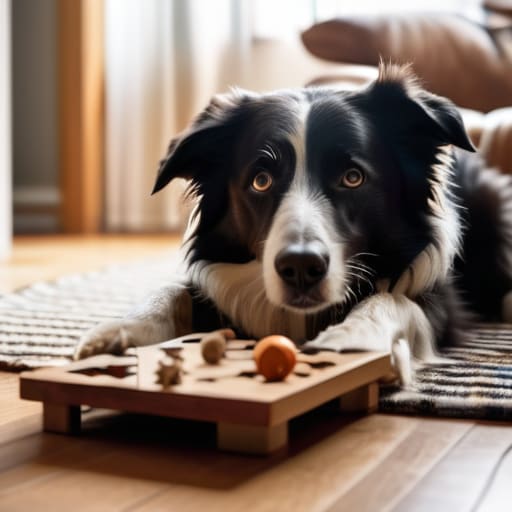
The biggest mistake I saw in the clinic wasn’t a lack of toys; it was owners waiting until the baseboards were shredded to realize their dog was understimulated. By then, you aren’t just dealing with a bored pup—you’re dealing with a habit. Preventing canine boredom isn’t about buying every gadget on the shelf; it’s about recognizing the subtle shifts in behavior. If your dog starts pacing, whining at the door, or suddenly finding intense interest in your expensive leather loafers, they aren’t being “bad.” They are telling you their brain is idling too high.
You can’t just throw a tennis ball in a hallway and call it a day. For a high-drive dog, that’s just five minutes of physical exertion followed by an hour of pent-up energy. You need mental stimulation for dogs to actually tire them out. I’ve always been a proponent of simple nose work exercises at home. Hide some high-value treats around a room or use a snuffle mat. Making them use their nose engages the brain in a way that a quick walk around the block never will. It’s the difference between a quick jog and a heavy lifting session.
Mental Stimulation for Dogs Why Your Brain Matters More Than Your Legs

I’ve spent decades watching owners walk into the clinic with a dog that has literally chewed through a structural door frame, only to realize they’ve been treating their pet like a piece of living furniture. They think if they walk the dog twice a day, they’ve checked the box. But here is the truth: a dog can be physically exhausted from a mile-long walk and still be mentally starving. If you aren’t providing actual mental stimulation for dogs, you aren’t just dealing with a bored pet; you’re dealing with a brain that is looking for any way to entertain itself, and usually, that means your expensive leather sofa.
You don’t need a subscription to a fancy toy club to fix this. Some of the best DIY dog enrichment ideas I used with my foster seniors involved nothing more than a muffin tin and some tennis balls, or a rolled-up towel stuffed with kibble. If you have a high-drive breed living in a small space, you have to stop thinking about distance and start thinking about complexity. A scent-work game—what we call nose work—can tire a dog out more effectively than a thirty-minute sprint, because it forces them to actually engage their processor rather than just running on autopilot.
Five Ways to Actually Keep Them Busy (Without Breaking Your Bank or Your Baseboards)
- Stop relying on those cheap rubber bones that they chew through in twenty minutes. If you want real occupation, you need high-value, long-lasting chews like dried bully sticks or yak cheese chews. They cost more—expect to pay anywhere from $3 to $7 per stick—but a dog that is focused on a hard chew is a dog that isn’t focused on your dining room chair legs.
- Use your mealtime as a training tool instead of just dumping kibble into a bowl. I’ve seen so many owners throw away money on “smart” electronic feeders when all they really need is a snuffle mat or even just a clean muffin tin. It forces them to use their nose, which burns more mental energy than a ten-minute walk around the block ever will.
- Learn the difference between “play” and “work.” If your dog is high-drive, a simple game of tug isn’t going to cut it; they’ll just get hyper and start zooming around the house like a maniac. You need to give them a job, like scent work. Hide a few pieces of high-value treats around the living room and tell them to “find it.” It settles their brain down rather than revving it up.
- Watch out for the “boredom bark.” If you notice your dog is starting to whine or bark at the slightest sound from the hallway, they aren’t being “naughty”—they’re under-stimulated and looking for an outlet. At that point, a toy isn’t enough; you need to increase the complexity of their mental tasks or they’ll start finding their own “jobs,” like digging at the carpet.
- Don’t fall for the “enrichment” marketing trap. You don’t need a $50 subscription box delivered to your door every month. Most of what those companies sell can be replicated with a cardboard box, some old towels, and a handful of kibble. If you can’t make a puzzle out of a recycled egg carton, you aren’t trying hard enough.
The Bottom Line: What Actually Matters
Stop chasing the “magic toy” high; a $20 Kong or a handful of kibble hidden in a rolled-up towel will do more for a bored dog’s brain than a $100 gadget that sits unused after ten minutes.
Learn to distinguish between “happy busy” and “anxious destructive”—if your dog is pacing, panting, or destroying things while you’re in the room, that isn’t boredom, it’s a behavioral issue that might need a vet’s eyes to rule out pain or anxiety.
Consistency beats intensity every single time; ten minutes of focused scent work or training after work is worth more to their mental health than one massive, exhausting hike once a week.
The Cost of Doing Nothing
“I’ve spent too many years cleaning up the aftermath of a ‘bored’ dog—the shredded sofa, the swallowed socks, the expensive emergency vet visits for foreign body obstructions—to tell you that a chew toy is a cure. If you aren’t giving their brain something to do, they will find something to do, and usually, it’s going to cost you more than a bag of puzzle treats.”
Marlene Ostrowski
The Bottom Line

At the end of the day, keeping a dog occupied indoors isn’t about buying every expensive Kong or snuffle mat that hits the market. It’s about recognizing that a bored dog is often a stressed dog. We’ve talked about the difference between simple restlessness and true destructive anxiety, and we’ve covered why a fifteen-minute sniffing session can sometimes tire a dog out more than a forty-minute walk. If you can master the balance of physical movement and mental puzzles, you’ll stop seeing your baseboards chewed to splinters and start seeing a dog that actually knows how to settle. Just remember: consistency beats intensity every single time.
I’ve spent three decades watching owners panic because their dog wouldn’t stop pacing or barking, only to realize the animal was just begging for a little more engagement with their world. You don’t need a degree or a massive budget to make a difference; you just need to pay attention to the subtle shifts in their behavior. Dogs don’t ask for much, and they don’t need a constant circus of toys—they just need to feel like they have a purpose in your home. Take care of their minds, and they’ll take care of your peace of mind.
Frequently Asked Questions
My dog is getting older and has some arthritis; is it safe to use high-energy mental games or should I stick to passive enrichment?
Look, don’t mistake “mental” for “stationary.” A dog can have a racing brain and stiff joints. If your dog is still mobile, high-energy mental games—like scent work or food puzzles—are actually better than passive stuff because they keep the neurological pathways firing. However, if they’re struggling to stand, skip the tug-of-war and stick to nose work. You want their mind engaged without them fighting their own body to stay upright.
I see people using expensive automated puzzle feeders, but is there a cheaper way to keep them busy without spending a fortune on gadgets?
Look, you don’t need a $50 plastic gadget to keep a dog busy. Most of those automated feeders are just fancy ways to distribute kibble. If you’ve got a ten-pound dog, a rolled-up old towel with some treats inside works just as well. For bigger dogs, use a heavy-duty rubber Kong—stuff it with plain Greek yogurt or canned pumpkin, freeze it, and you’ve bought yourself forty minutes of peace for about fifty cents.
At what point does "boredom" cross the line into a behavioral issue that requires a vet visit or a professional trainer?
Look, there’s a line between a dog who’s just being a nuisance and a dog that’s actually breaking down. If they’re just chewing a slipper, that’s boredom. But if they’re pacing incessantly, self-mutilating, or if their “boredom” looks like sudden, uncontrollable aggression, you’ve crossed into anxiety or a neurological issue. At that point, stop looking for a chew toy and call the vet. You need to rule out pain or chemical imbalances before you start training.