
I’ve spent three decades listening to people describe the sound of fur flying and hissing matches that sound more like a demon summoning than a domestic pet. Most of the advice you’ll find online about how to stop cats fighting is either way too expensive or way too soft—telling you to buy a $200 pheromone diffuser and just “hope for the best.” Let me tell you from experience: a plug-in gadget isn’t going to fix a territorial dispute or a redirected aggression incident that just sent your tabby into a blind rage. If you’re looking for a magical spray to make the tension vanish, you’re in the wrong place, but if you want to know why they’re actually lunging, I can help.
I’m not here to sell you anything or sugarcoat the reality of living with combative animals. I’m going to give you the unvarnished truth about when a spat is just a social correction and when it’s a medical emergency that requires a vet visit before someone loses an eye. We’ll talk about environmental management, the actual costs of behavioral medication, and how to tell the difference between a grudge and a crisis. No fluff, just the practical reality of keeping your peace and your pets safe.
Table of Contents
Recognizing the Real Signs of Cat Conflict
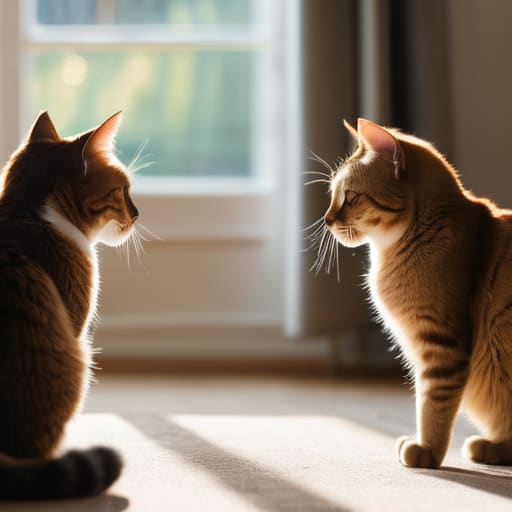
You have to learn to read the room before the claws come out. Most people wait until they hear a crash or a scream, but by then, the damage is usually done. I’ve spent enough years in exam rooms to know that the real signs of cat conflict start much earlier with the “silent war.” Look for the subtle shifts: a tail that won’t stop twitching, ears pinned slightly back, or one cat suddenly deciding they no longer want to sleep on the sofa because the other one is occupying the airspace. If they are just staring each other down from across the hallway, they are communicating a boundary. That’s a warning shot.
However, there is a line between posturing and a crisis. If you see one cat actively hiding, refusing to eat, or spending all their time under the bed, you aren’t just dealing with a spat; you’re dealing with serious feline behavioral issues that can lead to chronic stress and physical illness. If the fighting involves actual fur flying or blood, stop trying to mediate it yourself. You need to start separating fighting cats immediately to prevent a cycle of trauma that no amount of cat pheromone diffusers is going to fix.
When to Start Separating Fighting Cats Immediately

There is a massive difference between two cats who hiss at each other from across the room and a situation where you need to start separating fighting cats right this second. If you walk into a room and see fur flying, ears pinned flat against the skull, and one cat actually attempting to bite or claw the other’s throat, the truce is over. You don’t wait for them to “work it out.” You intervene—carefully, using a piece of cardboard or a thick towel to break their line of sight—and you put them in different rooms.
You also need to pull them apart if you see the silent tension that precedes a blowout. If one cat is constantly being cornered, or if one is spending all its time hiding under the bed and refusing to eat, you are dealing with more than just a spat. This is where multi-cat household management gets difficult. If the stress is high enough that they are stopping their normal routines, you have to reset. It’s better to deal with the headache of extra feeding stations and separate litter boxes now than to deal with a vet bill for a deep abscess or a torn ear later.
Five ways to actually fix the tension (without losing your mind)
- Stop the “resource wars” by doubling everything. If you have two cats, you need three litter boxes, three water bowls, and three separate feeding stations in different corners of the house. I’ve seen countless fights triggered simply because one cat decided to “guard” the only water bowl in the kitchen, turning a thirsty kitten into a territorial bully.
- Use pheromones, but don’t expect a miracle. Feliway diffusers can take the edge off a tense household, but they aren’t a magic wand. Think of them as a calming background hum rather than a sedative. If you’re spending $50 on a plug-in and nothing changes in ten days, the issue isn’t “stress”—it’s likely a medical or behavioral problem that requires a different approach.
- Scent swapping is your best friend for reintroduction. Take a clean sock, rub it on one cat’s cheeks, and leave it near the other cat’s food bowl. You want them to associate the “smell of the enemy” with the “smell of something good.” It’s slow work, and it might take a week, but it’s better than letting them stare each other down through a cracked door.
- Check for the “hidden” culprit: pain. I cannot stress this enough. If two cats who used to be fine suddenly start lunging at each other, one of them is likely hurting. A cat with dental pain or early-stage arthritis is going to be irritable, and a grumpy cat is a reactive cat. If the behavior change was sudden, don’t bother with behavior training; get them to the vet for bloodwork and a physical exam.
- Vertical space is non-negotiable. When cats fight on the floor, they’re trapped. If you have cat trees, wall shelves, or even just a cleared-off bookshelf, you give them an escape route. A cat that can climb “up” to get away from a confrontation is a cat that doesn’t feel the need to fight to defend its space.
The bottom line for your living room
Learn the difference between a loud argument and a physical fight; if you see fur flying, skin being torn, or one cat hiding and refusing to eat, you aren’t dealing with a “spat”—you’re dealing with a medical or behavioral crisis that needs professional intervention.
Stop looking for a “home remedy” to fix aggression; once cats have established a pattern of violence, you need to focus on environmental management—like adding more litter boxes and vertical space—rather than hoping they’ll just “get over it.”
Don’t let the cost of a vet visit keep you from checking for underlying pain; a cat that is suddenly aggressive is often a cat that is hurting, and if you wait until they are too sick to move to address the pain, you’ve already lost the battle.
The difference between a spat and a crisis
“Don’t get caught up in the ‘personality’ of your cats when they’re actually hurting each other. There is a massive, life-altering difference between two cats who hiss at each other from across the living room and two cats who are actually drawing blood or making one of them too terrified to use the litter box. One needs a new layout of your furniture; the other needs a vet and a serious intervention before someone ends up in the ER.”
Marlene Ostrowski
The Bottom Line

At the end of the day, you have to distinguish between a bit of posturing and a genuine breakdown in peace. If you’ve seen fur flying, skin broken, or a cat hiding in the back of a closet refusing to eat, you aren’t dealing with a “personality clash”—you’re dealing with a medical or behavioral crisis. Remember that physical aggression is often just a symptom of something else, like chronic pain or a sudden hormonal shift, so don’t be afraid to rule out the medical stuff first. Whether you decide to implement a slow reintroduction or you’re bracing yourself for the cost of a behavioral specialist, the goal is to stop the cycle before someone—human or feline—gets permanently hurt.
I know how exhausting it is to walk on eggshells in your own living room, constantly listening for the hiss or the thud of a body hitting the floor. It’s draining, and it’s okay to admit that it’s hard. But please, don’t let the stress make you settle for a household defined by fear. You can fix this, even if it takes weeks of pheromone diffusers, separate feeding stations, and a lot of patience. It isn’t about forcing them to be best friends; it’s about creating a safe environment where they can coexist without looking over their shoulders. You’ve got this, and your cats deserve a home that feels like a sanctuary again.
Frequently Asked Questions
Is it just "play fighting" or is one of them actually getting hurt?
Look, I’ve spent half my career cleaning up wounds that owners thought were “just playing.” If they’re wrestling, you’ll see silent movement, soft paws, and no fur flying. But if you hear guttural growling, see ears pinned flat, or find tufts of hair on the floor, that isn’t a game—it’s a fight. If one cat is hiding or stops eating, the stress is real. Check for any skin breaks; even a tiny puncture can abscess by Tuesday.
If I separate them now, am I just making the resentment worse in the long run?
No, you aren’t. That’s a common fear, but you can’t “train” a cat out of a physical fight by letting them keep fighting. You’re just teaching them that violence is the only way to communicate. Separation isn’t a punishment; it’s a circuit breaker. It lowers the cortisol levels so they can actually think again. It’s much easier to reintroduce two calm cats than two cats that have become genuine enemies.
How much is this going to cost me in vet bills if I don't fix the behavior immediately?
Look, if you ignore a behavioral spat and it turns into a physical fight, you aren’t just paying for a behavioral consult—which runs about $150 to $250—you’re paying for the fallout. One bite or scratch can lead to an abscess that requires sedation, draining, and antibiotics, easily hitting $400. If they tear up an eye or cause a puncture, you’re looking at emergency visits and specialists. It’s much cheaper to fix the tension now than to treat a wound later.