I spent twenty-eight years in a small practice watching people walk through those double doors with the exact same look of hollowed-out shock, usually because they thought a “heavy-duty” retractable leash was the answer to how to walk a dog safely in traffic. Let me tell you something: no amount of expensive, high-tech gear is going to save a dog that hasn’t been taught how to exist in a world full of screeching brakes and distracted drivers. I’ve seen too many owners spend a fortune on designer harnesses only to realize that equipment is not training, and when a panicked Golden Retriever decides to lunge at a passing cyclist, that fancy nylon won’t do a damn thing to stop the momentum.
I’m not here to sell you a subscription to a training app or some overpriced gadget that promises a miracle in three days. What I am going to give you is the unvarnished truth about what actually works when you’re standing on a curb with a hundred pounds of muscle and instinct pulling against you. We are going to talk about real-world mechanics, the actual costs of preventative training versus emergency vet bills, and how to build a reliable connection with your dog so that “safety” isn’t just a lucky guess every time you cross the street.
Table of Contents
- Preventing Dog Leash Pulling Before It Becomes a Crisis
- Why Relying on Instinct Fails During Safe Street Crossing for Pets
- Five Hard Truths About Keeping Your Dog Out of the Path of a Car
- The Bottom Line: What You Can't Afford to Ignore
- The Price of a Split Second
- The Bottom Line Between a Walk and a Crisis
- Frequently Asked Questions
Preventing Dog Leash Pulling Before It Becomes a Crisis
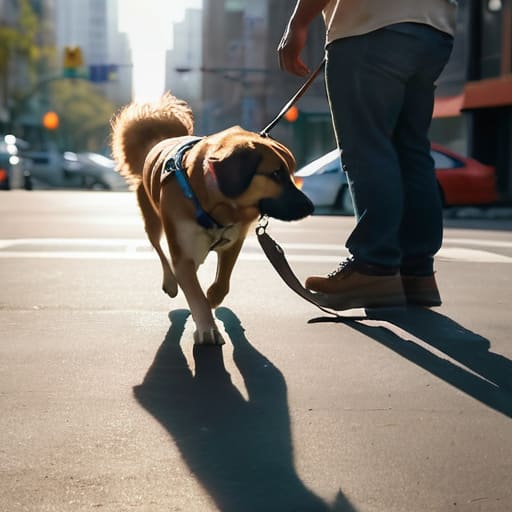
Most people think a pulling dog is just a nuisance, a bit of a workout for the shoulders. But I’ve spent enough time in the ER to know that a dog with a “strong pull” is actually a ticking time bomb. When you’re walking dogs in busy neighborhoods, that sudden, frantic lunging toward a squirrel or a passing cyclist isn’t just annoying—it’s how a leash snaps or a human gets yanked into the gutter. Preventing dog leash pulling has to start at home, with consistent boundaries, long before you hit the sidewalk. If you wait until you’re standing on a busy corner to try and teach “heel,” you’ve already lost the battle.
If you’re already dealing with a puller, stop reaching for the cheap, retractable leashes. I don’t care how much they claim to be “heavy duty”; they are a liability in traffic because they offer zero immediate control. You need a fixed-length lead and, ideally, some high-quality reflective dog gear so that even if your dog makes a sudden break for the street, a driver has a fighting chance to see them. It’s about building a margin of error. You aren’t just training a dog; you’re managing a physical force that can easily override your own strength.
Why Relying on Instinct Fails During Safe Street Crossing for Pets
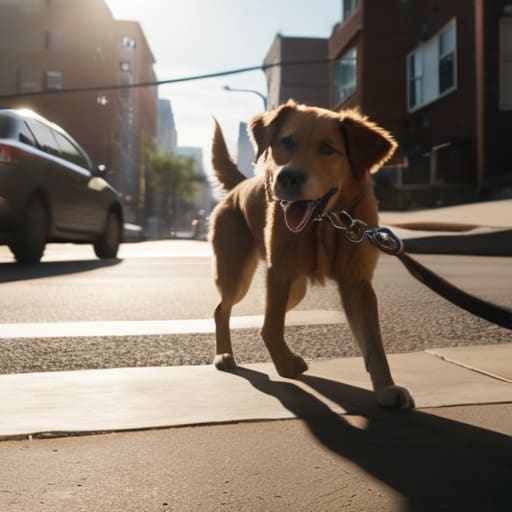
Your brain is wired to prioritize your own survival, which is a problem when you’re trying to manage a living, breathing creature that doesn’t share your sense of self-preservation. When a car horn blares or a cyclist swerves too close, your instinct is to jerk back or freeze. If you freeze, your dog—who likely just saw a squirrel or a discarded sandwich wrapper—will keep moving. If you jerk back, you might lose your footing or, worse, lose control of the lead entirely. I’ve seen too many people rely on “feeling” their way through walking dogs in busy neighborhoods, only to realize too late that their grip wasn’t prepared for a sudden, panicked lunge.
The reality is that instinct is reactive, and reactivity is what kills. You cannot “will” a dog to stay still when their nervous system is firing. Instead of relying on your reflexes, you have to rely on systems. This means moving beyond basic dog leash safety tips and actually implementing gear that compensates for human error. If you aren’t using a harness that distributes pressure away from the throat, or if you aren’t visible enough to a driver at dusk, you aren’t actually managing the risk—you’re just hoping for the best. And in my thirty years, hope has never been a reliable clinical outcome.
Five Hard Truths About Keeping Your Dog Out of the Path of a Car
- Stop buying the cheap, flimsy retractable leashes. They are a liability on a busy street. If a car backfires or a squirrel darts out, that thin nylon cord will snap or let your dog lunge with enough force to pull you right into the gutter. Get a heavy-duty, fixed-length leash—at least six feet—and learn to use it. It’s a twenty-dollar investment that keeps you in control when things go sideways.
- Master the “Check Before You Step” habit. I’ve seen too many owners walk their dogs on autopilot, stepping off a curb because they’re looking at a phone or a storefront. You don’t just look for cars; you look for the drivers. Is that person looking at their phone? Are they distracted? If you can’t see the driver’s eyes, don’t assume they see you and your 60-pound Lab.
- Understand the difference between a “distracted” dog and a “reactive” dog. If your dog freezes when they hear a truck, that’s fear; if they charge toward a passing bike, that’s reactivity. You need to know which one you’re dealing with before you hit a high-traffic zone. A reactive dog needs a head halter or a front-clip harness to give you mechanical leverage, because your arm strength won’t be enough once the adrenaline hits.
- Treat every intersection like a clinical exam—total focus required. When you reach a corner, stop. Wait. Let your dog settle into a “heel” or a “sit” before you even think about moving. If you can’t get them to settle in a quiet driveway, you have no business trying to navigate a four-way stop.
- Always have an emergency fund or a credit card ready for the “what if.” I’m not being morbid; I’m being practical. If a dog gets clipped by a bumper, you aren’t going to be debating the cost of an X-ray or a trauma stabilization fee while they’re bleeding on the asphalt. If you can’t afford the emergency vet visit, you shouldn’t be walking a high-energy breed in high-traffic areas. It sounds harsh, but it’s the reality of the job.
The Bottom Line: What You Can't Afford to Ignore
Stop treating leash training like a personality trait; if your dog is a “puller,” you aren’t just dealing with a nuisance, you’re dealing with a mechanical failure that will eventually lead to a snapped lead or a crushed animal when a car rounds a corner.
Invest in a front-clip harness now—expect to spend $30 to $50—because that money is significantly cheaper than a $3,000 emergency vet bill for a broken jaw or internal hemorrhaging caused by a sudden impact.
Learn the difference between a “distracted” dog and a “reactive” dog; a dog that freezes or lunges at a specific stimulus isn’t being stubborn, they are telling you their nervous system is overloaded, and that is a signal to stop walking near traffic altogether until you have a professional plan.
The Price of a Split Second
I’ve spent thirty years cleaning blood off exam tables because someone thought their dog was ‘too well-behaved’ to bolt, and let me tell you: a dog’s instinct to chase a squirrel doesn’t care about your budget or how close you are to the nearest ER. Safety isn’t about having a strong grip; it’s about realizing that by the time you’re actually fighting for control, you’ve already lost the battle.
Marlene Ostrowski
The Bottom Line Between a Walk and a Crisis
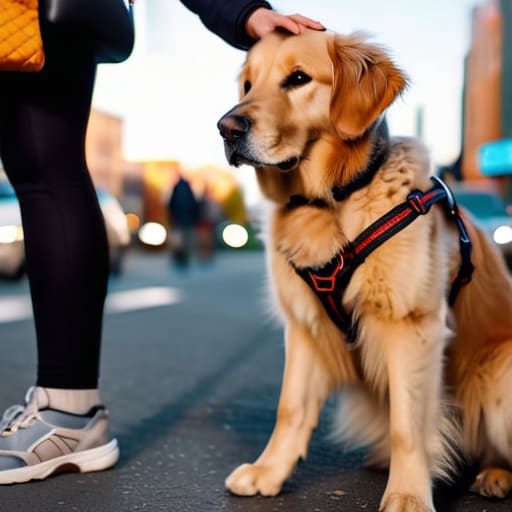
At the end of the day, walking a dog near traffic isn’t about being a “perfect” owner; it’s about managing the variables you can actually control. You can’t control a distracted driver or a sudden backfire from a truck, but you can control the tension on your leash, the quality of your harness, and your own level of vigilance. We’ve talked about training to stop the pulling and why your gut instinct is a terrible substitute for a controlled crossing, but the takeaway is simple: preparation is the only thing that stands between a routine stroll and an emergency vet visit. If you aren’t prepared for your dog to bolt, you aren’t actually walking them—you’re just hoping for the best, and hope is not a safety protocol.
I’ve spent three decades watching people walk into clinics with the same look of hollowed-out shock because a split-second distraction cost them everything. It breaks my heart every single time. But I also know that the effort you put into training and the money you spend on decent gear isn’t just “extra”—it is an investment in more years of quiet mornings and gray muzzles. Don’t let a moment of convenience turn into a lifetime of regret. Stay focused, stay prepared, and keep them close. It’s a lot of work, but I promise you, the peace of mind is worth every ounce of it.
Frequently Asked Questions
If my dog is already a "puller" and has lunged at a car before, is there a specific type of harness that actually works, or am I just throwing money away on gear that won't stop them?
If your dog has already lunged at a car, you aren’t just dealing with “pulling”; you’re dealing with a reactive impulse. A standard collar or a basic front-clip harness won’t stop a 60lb dog mid-lunge. You need a true no-pull harness—something like a Blue-9 or an Easy Walk—that redirects their momentum. Don’t waste money on “tactical” gear that just looks tough; look for hardware that physically limits their ability to drive forward.
How much is an emergency vet visit going to cost if my dog actually gets hit, and is there a way to tell if a "near miss" collision requires a physical exam?
If your dog actually gets hit, don’t look for a bargain; look for a credit card. A stabilization exam, X-rays, and IV fluids will easily run you $800 to $1,500 before you even discuss surgery for internal bleeding or a broken pelvis. As for a “near miss,” if they’re panting heavily, acting “off,” or have dilated pupils, go in. Adrenaline masks pain like a drug. If they aren’t acting 100% normal within ten minutes, get them checked.
I can't afford a professional trainer right now; are there any practical, low-cost ways to manage a high-drive dog in a high-traffic area without risking a snapped leash?
Look, I’ve seen enough snapped leashes and panicked owners to know that “just training them” isn’t always an option when the budget is tight. If you can’t afford a trainer, buy a front-clip harness—not a collar. It uses physics to redirect their momentum when they pull. Also, stop using retractable leashes; they’re essentially a ticking time bomb in traffic. Use a sturdy 6-foot nylon leash and keep your weight centered. It’s not fancy, but it’s safe.