
I’ve spent three decades watching people spend a fortune on “calming” pheromone diffusers and designer plastic enclosures, only to end up with a shredded sofa and a dog that’s terrified of its own shadow. Most of the advice you find online treats this like some mystical psychological breakthrough, but let’s be real: if you treat a crate like a prison, your dog is going to act like a prisoner. I’m not here to sell you on a fancy lifestyle brand; I’m here to give you a complete guide to crate and confinement training that actually works because it’s based on how animals actually behave when they’re stressed, not how they look in a curated Instagram post.
I’m not going to sugarcoat the process or pretend it’s going to be easy when you’re staring at a puddle on the rug at 3:00 AM. What I will do is give you the clinical reality of how to build confidence through structure, what mistakes lead to lifelong anxiety, and how to tell the difference between a puppy who is just being a nuisance and one that is truly panicking. This isn’t about perfection; it’s about practical management that keeps your home intact and your pet’s mental health stable.
Table of Contents
Benefits of Crate Training vs Making a Mistake

Look, people treat a crate like it’s a prison sentence, but in a clinical setting, we see it as a tool for safety. When you do it right, the primary benefits of crate training aren’t just about keeping your shoes from being chewed; it’s about providing a den where a dog can actually decompress. A well-managed crate offers a sense of security that can act as a form of dog confinement anxiety relief, especially for dogs that get overstimulated by a busy household. It gives them a predictable space where they know exactly what the boundaries are.
The mistake—and I saw this happen weekly in the clinic—is using the crate as a punishment. If you shove a dog in there because they chewed the baseboards, you aren’t training; you’re just creating a ticking time bomb of resentment and fear. That’s how you end up with a dog that panics the second they hear a metal latch. You want to focus on positive reinforcement crate training, where the crate is the place where the best things happen, not the place where the fun ends. If you miss that distinction, you aren’t teaching them boundaries; you’re just teaching them to be afraid of you.
Puppy Crate Training Tips That Actually Work
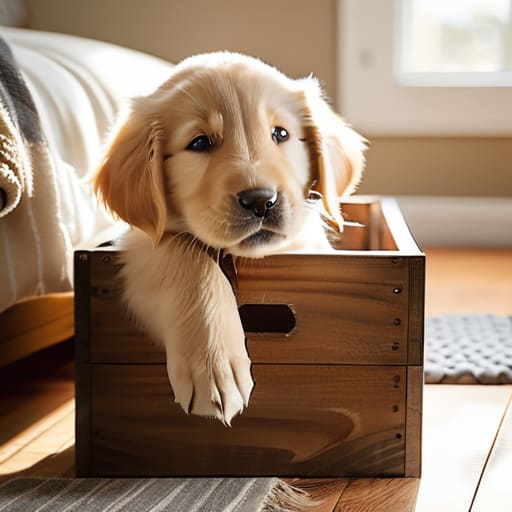
First off, stop thinking of the crate as a punishment. If you use it as a “timeout” corner when they chew the baseboards, you’ve already lost. You want positive reinforcement crate training, which means that crate needs to be the best place on earth. I’m talking high-value treats—the kind you’d normally save for a vet visit—tossed in there when they aren’t even looking. If they walk in on their own, they win the lottery. If you force them in, you’re just teaching them to fight you, and a struggling puppy is a recipe for a bruised nose and a stressed-out owner.
Consistency is the only way this sticks. You need a predictable crate training schedule for dogs that aligns with their biology. Puppies have tiny bladders; if you’re expecting them to hold it for six hours overnight, you aren’t training them, you’re just asking them to sit in their own mess, which ruins their house training. Work with their natural rhythms. Feed them, play them, and then let them settle. It’s about building a routine that feels like a safety net, not a cage.
Five Real-World Rules for Keeping Your Sanity (and Your Furniture)
- Stop using the crate as a punishment. If you shove your dog in there every time they chew a shoe or you get angry, you aren’t “training” them; you’re teaching them that the crate is a prison. It needs to be their safe spot, not the place they go when you’ve lost your temper.
- Watch the clock, not just the dog. A puppy’s bladder is tiny—we’re talking maybe 2 to 3 hours max during the day when they’re active. If you’re expecting an eight-week-old to hold it through a long movie, you’re going to end up with a soaked crate and a very frustrated animal.
- Don’t go cheap on the crate itself. I’ve seen people buy those flimsy, plastic starter kits that a medium-sized breed can chew through in twenty minutes. Get a sturdy wire crate with a divider panel; it allows the dog to grow into the space without being stuck in a room that’s too big for them to keep clean.
- The “Quiet Test” is non-negotiable. If your dog is screaming their head off, do not—I repeat, do not—open that door to scold them or give them a treat to shut them up. You are literally paying them in attention to be loud. Wait for even five seconds of silence before you interact, or you’ll be dealing with a professional howler.
- Management is better than discipline. If your dog is destructive, it’s usually because they’ve been given too much freedom too soon. Use baby gates or playpens to limit their world until they’ve actually earned the right to roam the whole house. It’s easier to prevent a mess than it is to teach a dog not to eat a sofa after the fact.
The Bottom Line on Confinement

Crate training isn’t about punishment or “locking them away”; it’s about creating a safe zone so you don’t come home to a chewed baseboard or, worse, a dog that’s ingested something toxic.
If your dog is frantically scratching at the door or panting heavily while confined, you’ve pushed too far too fast—stop, back up, and reset, or you’re just teaching them to panic.
Watch the clock and the bladder; a puppy can only hold it for so long, and if you ignore the physiological limits, you’re just training them to hold their urine until they end up with a UTI.
The Real Reason We Use Crates
A crate isn’t a prison cell and it shouldn’t be a punishment; it’s a safety net. I’ve spent far too many nights in the clinic treating dogs that swallowed something they shouldn’t have or chewed through a power cord because they were left unsupervised in a room. If you haven’t taught them how to settle in a confined space, you aren’t just dealing with a behavioral issue—you’re leaving the door wide open for a very expensive, very preventable emergency trip to the vet.
Marlene Ostrowski
The Bottom Line on Confinement
Look, at the end of the day, crate training isn’t about punishment or locking a dog away because they’re being difficult; it’s about creating a predictable, safe space that prevents the kind of accidents that lead to expensive vet visits for swallowed socks or chewed electrical cords. We’ve talked about the gradual approach, the importance of positive reinforcement, and why you can’t just expect a puppy to understand boundaries without a structured plan. If you do this right, you aren’t just managing a behavior; you are preventing a crisis before it happens. Remember, the goal is to make that crate a sanctuary, not a prison sentence, and that requires patience and consistency more than anything else.
I know it feels like a mountain of work right now, especially when you’re tired and all you want to do is relax on the couch without worrying about a chewed-up rug. But I’ve seen too many owners struggle with reactive or destructive dogs simply because they skipped these foundational steps when the animal was young. Building this discipline now is an investment in your future relationship with your pet. It’s about setting the stage for a dog that is calm, confident, and capable of navigating the world alongside you. Do the work today so you don’t have to spend your weekends managing a disaster tomorrow.
Frequently Asked Questions
My dog is absolutely losing it and howling every time I close the door; is this just normal separation anxiety or am I actually causing him psychological harm?
Look, there’s a difference between “I’m lonely” and “I am panicking.” If he’s just whining or pacing, he’s protesting the boundary. If he’s panting, drooling, or trying to claw his way through the door until his nails bleed, that’s a crisis. That’s not “bad behavior”; that’s a physiological meltdown. You aren’t just “being mean”—you’re witnessing a panic attack. If it’s the latter, stop the training immediately and call your vet. You can’t train through a breakdown.
How long can I realistically leave a dog in a crate during a work day before it becomes a bladder issue or a behavioral nightmare?
Here is the truth: there is no magic number, but for an adult dog, four to six hours is usually the limit before you’re looking at a mess or a stressed animal. If you’re talking about a puppy, you’re looking at much less—basically their age in months plus one. If you leave a dog in a crate for eight or nine hours every day, don’t be surprised when they start digging at the crate or losing bladder control. It’s not “discipline”; it’s confinement distress.
What do I do if my dog has already started chewing the metal bars or destroying the crate—is it time to give up or just buy a sturdier model?
Don’t give up, but stop letting them chew those bars. If they’re gnawing on metal, they aren’t just “being bad”—they’re either incredibly bored or they’ve developed an anxiety that’s going to lead to broken teeth or a swallowed piece of plastic. A sturdier crate is a Band-Aid; you need to figure out if this is energy or panic. If it’s anxiety, a heavy-duty kennel won’t fix the underlying stress.