I’ve spent thirty years watching people spiral into a Google-induced panic because they found a new growth on their dog, only to realize they’ve wasted a fortune on “holistic” topical salves that do nothing but delay the inevitable. Most of the advice you’ll find online is either way too vague to be useful or far too alarmist to be sane. If you are looking for how to understand lumps and bumps, you don’t need a lecture on cellular biology or a list of expensive supplements; you need to know if that new mass is a harmless lipoma or something that requires a biopsy before it metastasizes.
I’m not here to sugarcoat the reality of oncology or sell you a miracle cure. My promise to you is simple: I will tell you what a lump probably is, what it might be, and—most importantly—which one means you go to the ER tonight rather than waiting for your regular vet to open on Monday. I’ll give you the clinical signs to look for and a realistic idea of what these procedures actually cost, because money shouldn’t be the reason you hesitate when time is the one thing your pet doesn’t have.
Table of Contents
- Differentiating Benign vs Malignant Growths the Real Difference
- Common Types of Subcutaneous Cysts and What They Cost
- Five Things I Wish Every Pet Owner Knew Before They Called the Clinic
- The Bottom Line: When to Watch and When to Act
- The Cost of Hesitation
- The Bottom Line
- Frequently Asked Questions
Differentiating Benign vs Malignant Growths the Real Difference
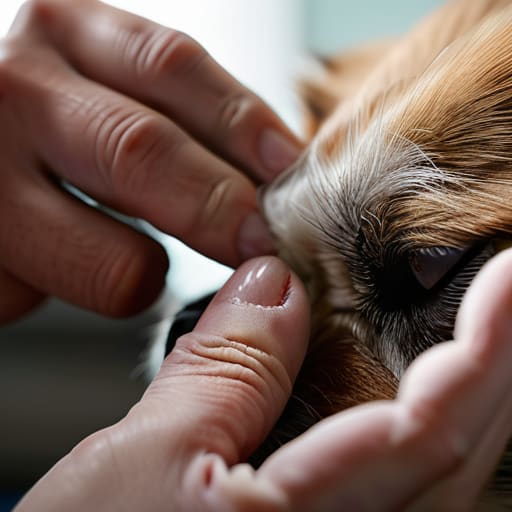
Now, I’m going to be blunt: you cannot tell the difference between a fatty lipoma and a mast cell tumor just by poking at it through your fingers. I’ve had owners swear to me that a lump “feels soft” and therefore must be fine, only for us to find out later it was a highly aggressive sarcoma. When it comes to differentiating benign vs malignant growths, the physical sensation is a starting point, not a diagnosis. A benign growth—like many common types of subcutaneous cysts—tends to be mobile, meaning it slides under the skin like a marble in a sock. Malignant tumors are often “fixed,” meaning they feel anchored to the underlying muscle or tissue.
If you find something that is growing rapidly, feels stone-hard, or has changed color, stop playing doctor and call the clinic. You might hear the vet mention a Fine Needle Aspirate (FNA); that’s just a quick way to suck some cells into a slide to see what we’re dealing with. If that comes back inconclusive, they’ll suggest a formal biopsy procedure explanation, which usually involves a small incision to get a real piece of the tissue. It’s not fun, and it isn’t cheap, but knowing for sure is the only way to stop guessing.
Common Types of Subcutaneous Cysts and What They Cost

When you’re feeling through a pet’s coat, you’ll likely run into a few common types of subcutaneous cysts that aren’t necessarily a death sentence. Sebaceous cysts are the most frequent culprits; they’re essentially just clogged oil glands. They feel like little pea-sized marbles under the skin. If they aren’t red or oozing, you can usually monitor them, but if they rupture, they get nasty fast. Then there are lipomas—fatty tumors. I’ve handled thousands of these. They feel soft, they move easily under the skin, and they generally don’t bother the animal.
The real headache starts when we have to move from “watching it” to “doing something about it.” If a cyst looks suspicious, we’ll suggest a fine needle aspirate (FNA) or a formal biopsy procedure explanation to rule out the bad stuff. You’re looking at anywhere from $150 to $400 just for the diagnostics, depending on whether you’re doing a quick needle draw or a surgical excision. If it’s a simple cyst removal, expect to add another $300 to $600 for the local anesthesia and sutures. It’s a pill to swallow, but it’s much cheaper than treating a metastatic cancer later.
Five Things I Wish Every Pet Owner Knew Before They Called the Clinic
- Start a “Lump Log” immediately. Don’t just tell me “it’s getting bigger”—that’s how we miss the window for treatment. Get a piece of paper, write down the date, the approximate size in centimeters, and whether it feels like a marble or a grape. If you can’t tell me if it’s grown since last Tuesday, you aren’t monitoring it; you’re just noticing it.
- The “Slide Test” is your best friend at home. Gently try to move the lump under the skin with your fingers. If it slides around like a little bead, that’s usually a good sign—it’s likely a lipoma or a cyst. If it feels like it’s anchored to the muscle or the bone and won’t budge, stop poking it and call me. That lack of mobility is what keeps me up at night.
- Check the “neighborhood” around the growth. A lump by itself is one thing, but if the skin around it is red, hot to the touch, or oozing, you aren’t looking at a slow-growing tumor anymore; you’re looking at an abscess or an infection. That moves your timeline from “next week” to “right now.”
- Don’t let “it’s not bothering them” fool you. I have seen dogs with massive, aggressive sarcomas who still wag their tails and eat their kibble like nothing is wrong. Animals are masters at hiding discomfort until it’s physically impossible to mask. If the lump is there, it’s a clinical finding, regardless of whether your dog is acting “normal.”
- Prepare for the “Fine Needle Aspirate” (FNA) conversation. When you bring them in, the first thing I’m going to suggest is a quick needle draw to see what the cells look like under a microscope. It’s relatively cheap—usually between $50 and $150 depending on the clinic—but it’s the only way to stop the guessing game. Don’t let the fear of a small bill prevent you from getting the one piece of information that actually matters.
The Bottom Line: When to Watch and When to Act
If a lump is growing noticeably over a week, feels stuck to the underlying tissue, or changes color, stop “monitoring” it and call the vet. A slow-growing fatty lipoma is one thing, but a fast-moving mass is a race against time.
Don’t let the fear of the bill keep you in the dark; knowing exactly what a lump is via a fine needle aspirate (FNA) is relatively inexpensive—usually between $50 and $100—and it prevents you from spending thousands later on a crisis that could have been managed months ago.
Keep a written log of the size and texture of any new growth. When you’re standing in the exam room, telling the vet “it grew 2 centimeters in ten days” is worth more than a dozen “it just seems bigger” descriptions.
The Cost of Hesitation
“I’ve spent thirty years watching people try to ‘wait and see’ with a lump, hoping it’s just a harmless fatty tumor, only to realize too late that they were actually watching a malignancy take root. In my experience, the difference between a $400 surgical removal and a $4,000 end-of-life conversation is usually just a few weeks of courage.”
Marlene Ostrowski
The Bottom Line

At the end of the day, you aren’t expected to be a pathologist, but you are expected to be an observer. You don’t need to know if a mass is a lipoma or a mast cell tumor just by poking it, but you do need to know if it’s changing. If a lump is growing faster than a fingernail, if it’s turning red and angry, or if your dog is suddenly licking at it like it’s a treat, that is your signal. Don’t get caught in the “wait and see” trap because a forum told you it looks harmless. Trust your hands and your gut. Whether it’s a $200 fine-needle aspirate to get some peace of mind or a $2,000 surgical removal, acting early is almost always cheaper and significantly less painful than trying to catch up to a malignancy that’s already moved on to the next organ.
I know the anxiety that hits when you find something new under your pet’s skin. I’ve sat in those exam rooms and watched owners stare at the floor, calculating their bank balances against their pet’s survival. It is a heavy, lonely place to be. But remember that being a good pet owner isn’t about having a pet that never gets sick; it’s about being the person who notices the change and has the courage to do something about it. You are their only advocate in a world that doesn’t speak their language. You’ve got this, and they are lucky to have you watching over them.
Frequently Asked Questions
If the lump isn't growing and isn't bothering them, can I really afford to just leave it alone?
Here is the truth: “Leaving it alone” isn’t free; it’s just a deferred payment with high interest. If it’s truly static and not bothering them, you might be okay for a month. But if that lump is a mast cell tumor, it can look calm one day and become a systemic emergency the next. Don’t gamble on “waiting and seeing” without a baseline. Get it aspirated. A fine needle aspirate is cheap—usually fifty bucks—and it’s much cheaper than oncology.
How much is a fine needle aspirate actually going to set me back at the clinic?
Let’s talk numbers, because I know that’s what’s keeping you up. A Fine Needle Aspirate (FNA) isn’t just a quick poke; you’re paying for the technician’s time, the slides, and the pathologist reading them. Expect to pay anywhere from $150 to $300 for the procedure and the lab report. If they have to do multiple sites or a biopsy, that number climbs fast. It’s an investment, but it’s cheaper than guessing.
My dog is licking at the bump constantly—does that automatically mean it's something bad?
No, constant licking doesn’t automatically mean it’s cancer, but it does mean it’s a problem. Licking is the fastest way to turn a simple, manageable bump into a nasty, weeping infection. If the area is red, hot, or smelling a bit off, that’s inflammation or secondary infection. Whether it’s a benign cyst or something nastier, if they won’t leave it alone, you need to get an Elizabethan collar on them right now.